
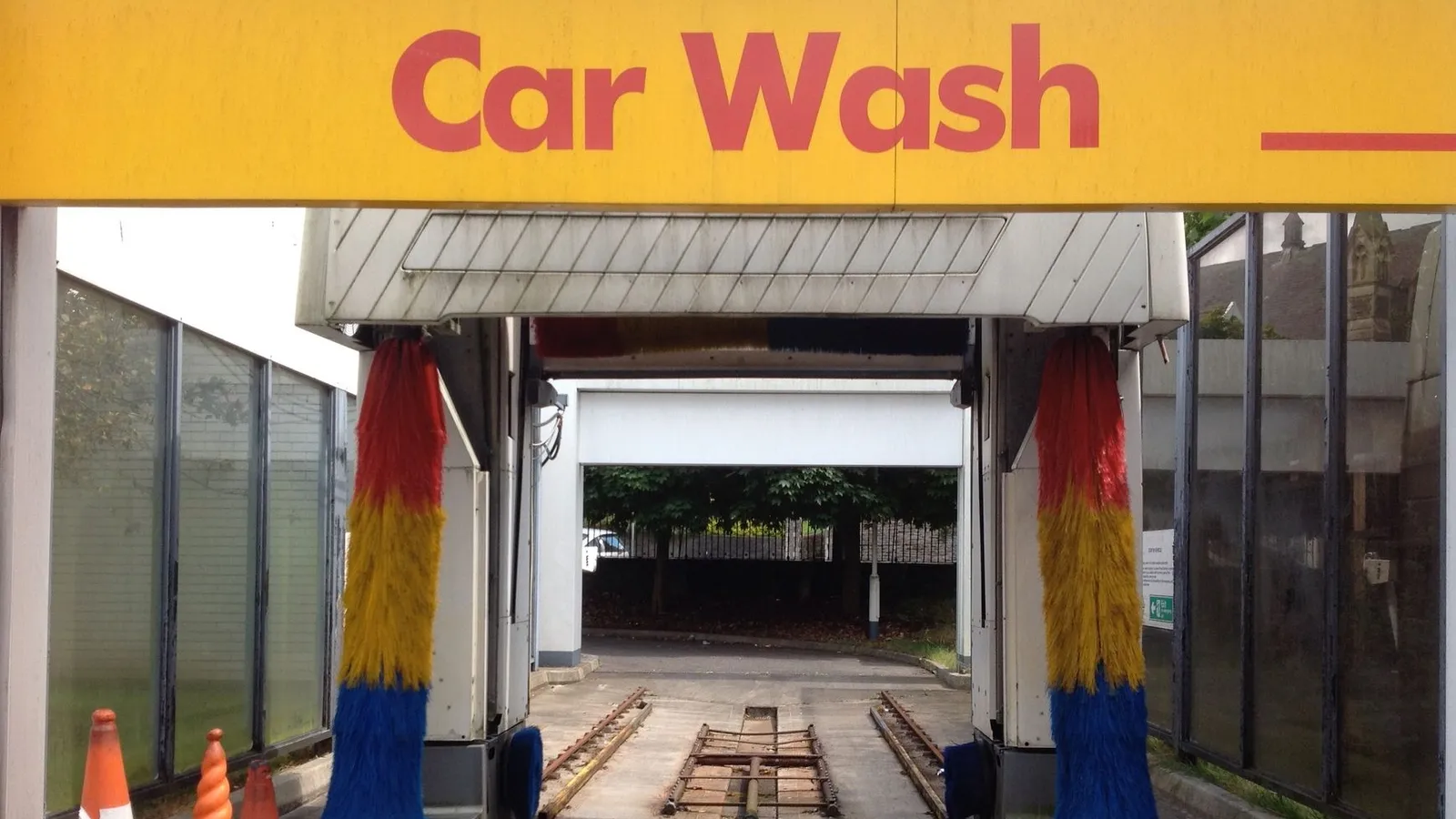
The car looks clean when it rolls out of the tunnel. The paint looks tired the next evening, when the sun is low and you catch the hood at an angle. That haze is usually swirl. It is not a failure of the color. It is a pile of fine scratches in the clear coat, all running the same direction the brush traveled.
Dallas has no shortage of these washes. They are fast, they are on the way home, and they feel like maintenance. On bare paint they are often the reason a three-year-old car looks older than the odometer suggests.
What the brush is actually doing
A tunnel brush is a moving surface that touches every car ahead of yours. It picks up grit. That grit gets dragged across your clear coat in a repeating arc. Each pass is shallow. None of them looks dramatic while the panel is wet. Dry the car, park it in late light, and the arcs show up as a cloudy map.
Touchless tunnels avoid the brush and trade it for stronger chemicals. Those chemicals can strip waxes and can dull a neglected clear coat. They also do a poor job on the lower panels, the jambs, and the wheels. “Touchless” is not the same sentence as “safe for a coated car,” and it is not a detail.
A hand wash can leave the same swirls if the mitt is dropped on the ground or if the bucket has no way to separate grit from the wash media. The tool is not magic. The dirt on the tool is the problem.
What you are looking at in the sun
Swirl is a clear-coat scratch, not a stain in the base color. If you can catch it with a fingernail as a distinct line, it may be deeper than a wash swirl. Wash swirls are usually too fine to feel and easy to see. That is why they seem to “appear” after a wash. They were cut during the wash. The wet surface hid them until it dried.
Black, dark gray, and dark blue show this first. Silver and white hide it longer. The paint is not tougher. The contrast is lower. We see the same pattern on trucks that live in open lots and on cars that only visit the tunnel once a week.
What film and coating do with a tunnel
Paint protection film takes the brush on the film, not on the clear coat. Light scuffs in the film’s top layer can relax with heat. That is the self-healing behavior. A torn edge, a peeled corner, or a brush that catches a loose edge is a different failure. Film is not a reason to seek out the dirtiest brush in town. It is a reason the paint survives a mistake.
A ceramic coating does not add thickness you can hide a brush behind. It makes the surface slicker, so some dirt releases, and it does not self-heal a scratch the brush just cut. If the coating is still intact, a careful hand wash keeps it that way. A heavy brush can scratch the coating and, once the coating is worn through in that arc, scratch the clear coat under it.
We install both in the studio, not in a bay at your house. If you want the physical barrier, that is paint protection film. Coverage is Partial Front, Full Front, Full Vehicle, or Custom. The services list starts at $850. There is no per-coverage dollar menu, because the car and the panels decide the quote.
The wash we actually recommend
Two buckets or a grit guard, a clean mitt, car soap, and a dry with clean towels. Wheels first, then paint, top to bottom. Rinse the mitt often. Do not use a dish soap as your weekly wash. It is built to strip oils, and a coating relies on the surface staying intact.
If the car has film, keep the pressure washer, if you use one, back from the edges. A nozzle an inch off a film edge can lift it. The same caution applies to a brush that snags a corner near a headlight or a door cup.
If the paint already looks like a tunnel map, washing more carefully will not remove the map. It will stop adding to it. Removing it is paint correction, from $450, and only where the clear coat is thick enough to level. We say so before we polish. Correction before a coating is the sequence. Coating over swirls makes them easier to see, not harder.
The longer version of living with a coated car is in how to wash and maintain a coated car. This piece is the narrower point: the tunnel is where a lot of Dallas swirls begin.
If the tunnel is the only option some weeks
Sometimes the car is filthy and you are not going to hand wash it in August at noon. Use a touchless wash if you can, skip the “wax” upsell at the exit, and do not let spinning brushes at the tire shine station rub the lower film edges. Then look at the paint in low sun once a month. If the haze is building, the wash is costing you a correction later.
If you want a straight read on whether the haze is still correctable, request a quote and bring the car in the daylight. We will tell you if a polish is worth it or if the clear coat is already too thin to chase every arc.