
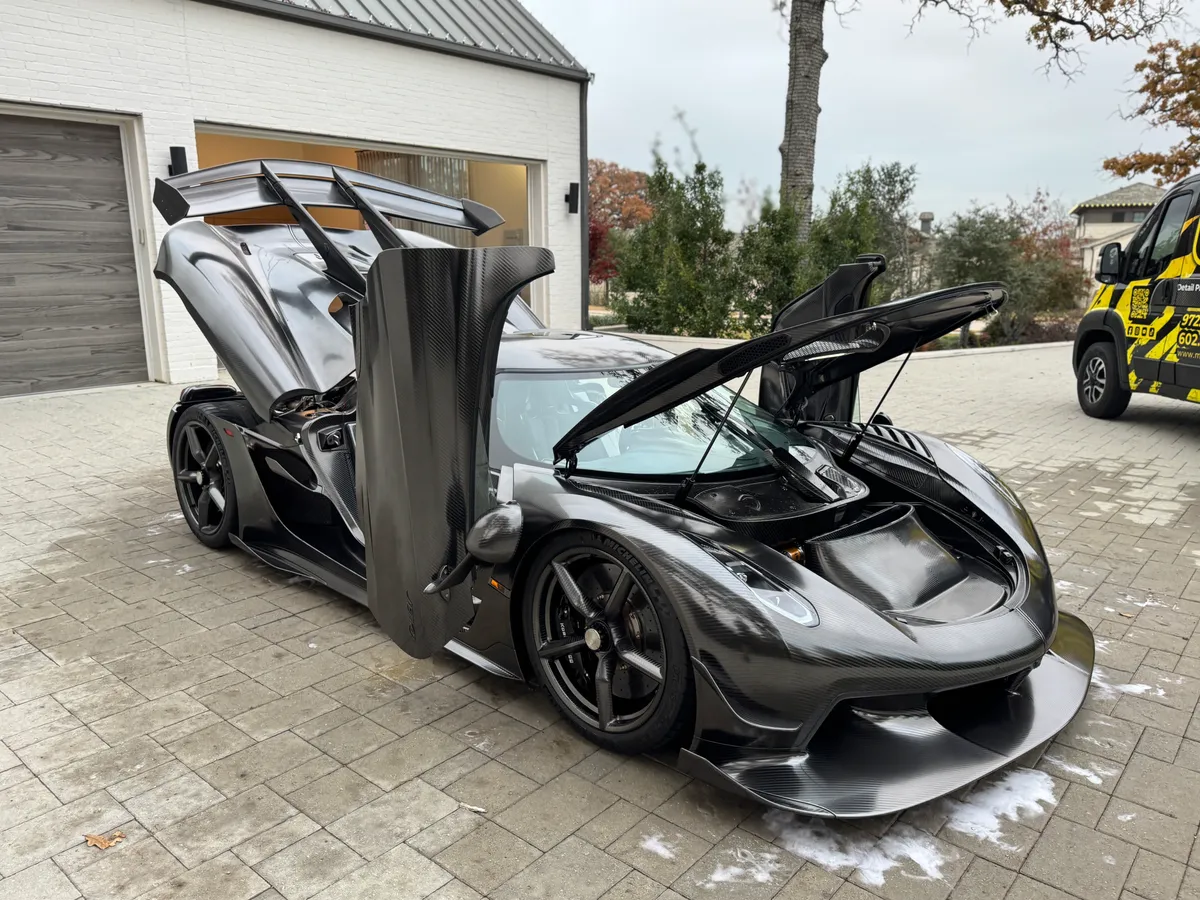
Two Products, One Question That Comes Up Every Week
Most cars that roll into Protektd already wearing film arrive with the same question from their owners: “Should I put a coating on top of it?” Sometimes they heard it from a friend. Sometimes they read it somewhere. A few have already done it on a previous car and want to know if we’d do it differently here.
The short answer is yes, often it makes sense. But the reasoning matters more than the yes, so let me explain what each product actually does, where they overlap, and where coating over PPF earns its place on a car you care about.
What Each Product Does on Its Own
Paint protection film is a urethane layer bonded to your paint. Its job is physical. It absorbs rock chips, deflects road debris, and takes the minor abrasions that would otherwise reach your clear coat. The self-healing property is real and measurable: light swirl marks and surface scratches disappear with heat, whether that’s direct sun on a July afternoon in Frisco or a warm rinse. That happens because of the film’s elastomeric topcoat, not any chemistry you apply over it.
What PPF does not do is make the car easier to maintain. It is still a surface. Contaminants still stick to it. Water still sheets off at whatever angle it wants. Without any coating on top, PPF has modest hydrophobic behavior, but it dulls over time from road grime, mineral deposits from hard North Texas water, and the UV load this region delivers ten months out of twelve.
Ceramic coating is different in kind. It bonds to a surface chemically and builds a hard, slick layer that rates highly on pencil hardness scales, with 9H being the standard reference point you’ll see. That hardness adds scratch resistance above what uncoated film provides. More practically, it creates genuine hydrophobic repulsion, so water beads hard, mud and brake dust release more easily, and the surface stays cleaner between washes.
What ceramic coating does not do is absorb impacts. A pebble kicked up by a truck on 35E does not care how many coats of ceramic are on your hood. Coating alone will not save your paint from chips. It also does not self-heal. If the coating layer itself gets scratched through, that damage stays until it is corrected or the coating is reapplied.
Put plainly: PPF handles the physical threats. Coating handles contamination and long-term surface maintenance.
Why the Combination Works
Layering a ceramic coating over cured PPF is not redundant. The two products address different problems, and they work together in a way that neither handles alone.
The most practical benefit is washability. DFW roads carry real contamination. The construction dust around Legacy Drive and the tollway corridors, the iron fallout from DART lines, the tree sap from spring storms in older neighborhoods like Lakewood and Preston Hollow. All of that lands on film just as it lands on paint. A coated surface releases that contamination faster, requires less mechanical contact during washing, and resists the etching that industrial fallout can cause over months of exposure.
The second benefit is optical clarity. Film that has been coated and maintained properly holds its gloss longer. Uncoated film, especially on horizontal panels, can develop a faint haze after a few years. That is partially UV oxidation, partially surface micro-scratching from routine maintenance. A ceramic layer on top slows both.
The third benefit is longevity of the film itself. Less friction during washing means less chance of edge lifting, less chance of swirl accumulation, and less overall stress on the film’s surface coat. The film still self-heals what it self-heals, but you are starting each wash from a cleaner surface.
When the Combination Makes Less Sense
There are situations where we tell customers the combination may not be the right spend.
If the film is older, has significant contamination embedded in it, or shows areas of lifting and hazing, coating over it is not the right first move. The coating will lock in whatever condition the surface is in. Prep matters more than product.
If a car is used as a daily driver with no regular professional maintenance, the coating’s longevity shrinks considerably. A ceramic coating on PPF can hold up for several years with proper care. On a car that gets a gas-station automatic wash every few weeks and sits outside year-round in Plano summer heat, the realistic lifespan is much shorter. The coating does not perform in a vacuum. It performs relative to how the car is cared for.
If the budget is genuinely constrained and the choice is between full-coverage PPF with no coating versus partial PPF with coating, full-coverage film usually wins. The physical protection is the foundation. Coating is the enhancement layer, not the base.
What the Stack Actually Looks Like in Practice
Here is a straightforward comparison of what you get with each approach:
| Configuration | Physical Impact Protection | Hydrophobic Performance | Ease of Maintenance | Self-Healing |
|---|---|---|---|---|
| PPF alone | Yes | Moderate | Moderate | Yes (film surface) |
| Ceramic coating alone | No | High | High | No |
| PPF + ceramic coating | Yes | High | High | Yes (film surface) |
The table is not trying to sell the combination. It is just showing the honest gap. If you only coat, you have no chip protection. If you only film without coating, maintenance is harder and the surface degrades faster. Both together covers the most ground.
The Prep Step Most People Skip
One thing worth saying directly: the condition of the film before coating matters as much as the coating itself.
Any contamination, oxidation, or installation residue on the film surface needs to be addressed before a coating goes down. At Protektd, that means a thorough decontamination wash using Manett’s chemistry designed for film-safe iron removal and surface preparation, followed by a panel wipe to confirm the surface is ready. Skipping that step produces a coated surface that looks fine at first and degrades faster than it should.
If your film is more than a year old, there is a reasonable chance it needs some level of paint correction work or at least a surface polish before coating. We assess every car individually before recommending the sequence.
The Practical Takeaway
Coating over PPF is a sound investment when the film is in good condition, the car will be maintained properly, and the goal is long-term protection with less effort between washes. It is not magic. It does not change what the film does or add self-healing properties to the coating. What it does is make the whole system more durable and easier to live with, especially in a climate that pushes every product harder than the warranty cards account for.
If you have film on your car and you are curious whether your specific situation would benefit from a coating on top, the honest conversation starts with looking at the film’s current condition. That is always the right place to begin.