
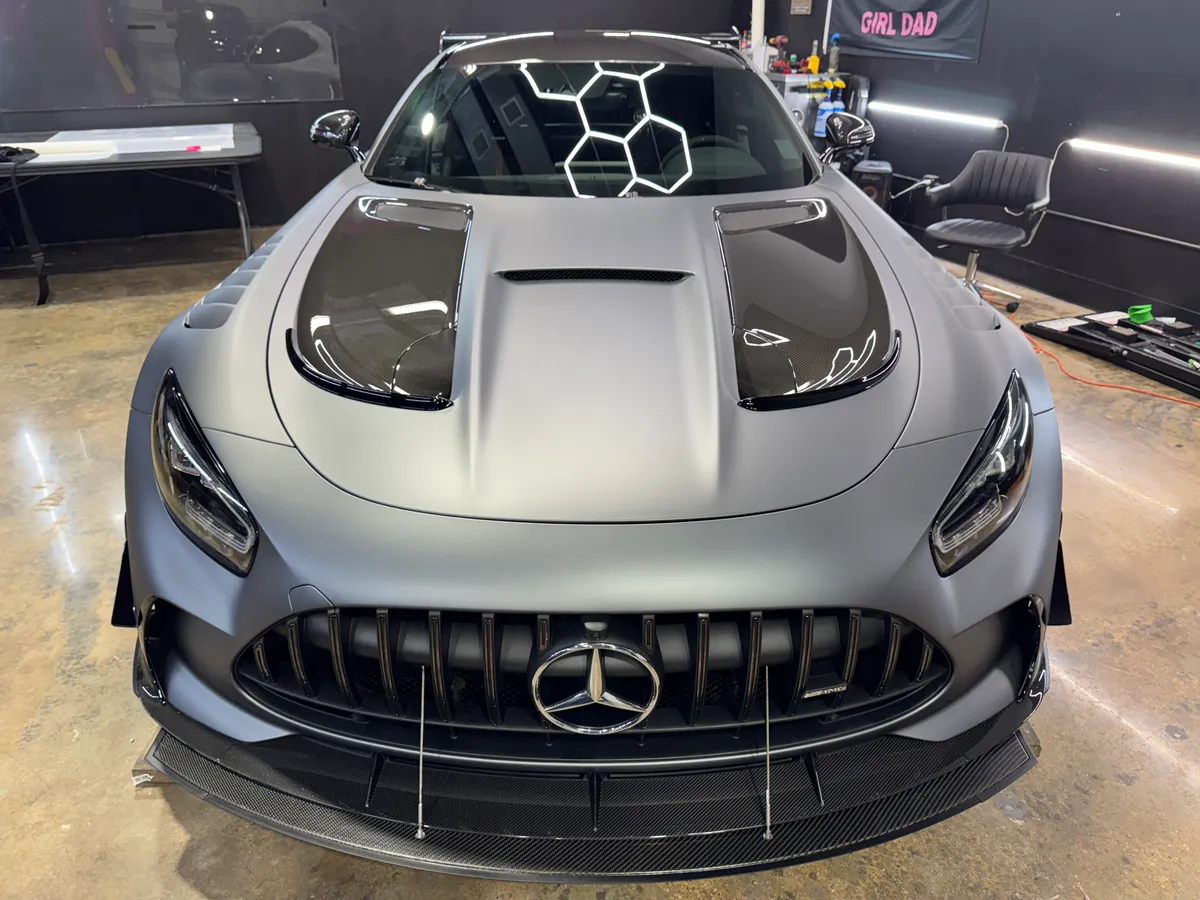
Traditional vehicle wraps have been around for decades. Color PPF is different, and the distinction is worth understanding before you commit.
Here’s the short version: color PPF delivers a full vehicle color change using a self-healing protective film instead of vinyl. It looks as good as a paint job, protects the original paint underneath, and can be removed without damaging the factory finish. If you’re considering any kind of color change, this is the guide that explains when it makes sense and when something else does.
What Color PPF Is (and Isn’t)
Color PPF starts with the same base technology as clear paint protection film: a cast polyurethane film with a self-healing top coat and a pressure-sensitive adhesive. The difference is that it’s manufactured with pigment throughout the film layers, so the color becomes the finish itself.
This means:
- It’s fully protective. Rock chips, road debris, light scratches: all handled the same way clear PPF handles them. The film absorbs the impact so the factory paint doesn’t.
- It self-heals. Light surface scratches in the film disappear when heat is applied, either sunlight or a heat gun. This is not true of vinyl wraps.
- It’s removable. Quality color PPF is designed to be removed without adhesive residue or paint damage, assuming the underlying paint is in good condition.
- It’s reversible. Remove it, and you’re back to factory color.
What it is not: color PPF is not a vinyl wrap. Vinyl wraps are made from PVC film and are designed primarily for appearance change, not protection. A vinyl wrap will not stop a rock chip. Color PPF will.
How It Compares to the Alternatives
Color PPF vs Vinyl Wrap
| Color PPF | Vinyl Wrap | |
|---|---|---|
| Rock chip protection | Yes | No |
| Self-healing | Yes | No |
| Gloss quality | High | High |
| Matte/satin finishes available | Yes | Yes |
| Longevity | Long-term (10-year warranty) | Shorter-lived |
| Removable | Yes | Yes |
| Price | Higher | Lower |
The core difference: vinyl wraps are appearance products. Color PPF is an appearance product and a protection product. If you’re changing the color of a vehicle you care about, the protection layer matters.
Color PPF vs Respraying
A professional respray changes your vehicle’s color permanently through paint. Color PPF changes it reversibly through film.
For most vehicle owners, color PPF wins on every axis except one: if you want the change to be permanent and you plan to own the vehicle indefinitely, a high-quality respray might be appropriate. But:
- A professional respray affects resale value (factory paint = better resale)
- Respraying is irreversible
- A respray on a leased vehicle triggers financial penalties at turn-in
- Respray quality varies significantly, and bad work is hard to fix
Color PPF lets you have the color change without permanently committing to it. For most use cases, that’s better.
The Lease Vehicle Case
This is where color PPF makes its clearest argument. Leased vehicles cannot be repainted. Vinyl wraps are sometimes accepted (check your lease terms) but are typically not at the quality level drivers want for their everyday experience.
Color PPF threads the needle: it transforms the vehicle’s appearance convincingly, protects the underlying paint from rock chips and road damage (which leasing companies often charge for at return), and is removed cleanly at lease end.
If you lease a car you love the model of but not the color option, color PPF is a legitimate solution. The film comes off, the factory paint is in better shape than it would have been unprotected, and you return the vehicle clean.
Finish Options Available
Color PPF is available in a wide range of finishes beyond solid colors:
Gloss: The most common. Full gloss mirrors a fresh paint job.
Matte: Flat, non-reflective finish. Increasingly popular on darker vehicles. Gives an aggressive, intentional appearance that stands out from standard finishes.
Satin: Between gloss and matte. A semi-sheen finish that looks exceptionally premium, closer to the factory satin finishes some manufacturers offer on high-end trims.
Chrome/metallic: Higher-end finishes that produce a metallic or mirror-like effect. These require more precise installation.
The finish choice also affects maintenance. Matte and satin finishes require matte-safe cleaning products. Standard waxes and glossy ceramic coatings will alter the appearance of a matte or satin film.
Installation: What to Expect
Color PPF installation on a full vehicle takes 3–7 days. Here’s the process:
1. Paint assessment and correction (if needed) The film goes over the existing paint. Anything that’s wrong with the paint will be visible through the film or affect adhesion. A thorough decontamination and any necessary paint correction happens first.
2. Panel-by-panel installation Each panel is cut using a plotter (computer-guided precision cutting) and applied by hand. The edges are wrapped under the panel where possible to eliminate visible seams. Complex areas like mirrors, door handles, and A-pillars require the most skill.
3. Curing and inspection The film requires curing time before it reaches full adhesive strength. Once cured, we inspect every panel for bubbles, lifting, or installation artifacts.
4. Final walk-through Before pickup, we walk you through the finished vehicle. If anything doesn’t meet the standard, it gets addressed.
The Right Candidate for Color PPF
Color PPF makes the most sense for:
- New or near-new vehicles where you want a different color from launch without committing permanently
- Leased vehicles where permanent changes aren’t an option
- Collector or enthusiast vehicles where factory paint preservation matters for long-term value
- Vehicles you want to sell eventually, where factory paint under a removable film is a better resale story than a respray
- Anyone who wants protection AND a color change, where the dual function is the unique value
It’s less ideal for:
- Very old vehicles where the factory paint is already heavily damaged (the film can’t fix what’s underneath)
- Budget-constrained situations (color PPF is a premium product)
How Color PPF Is Priced in Dallas
Color PPF is priced by coverage area and film tier, and the figure varies because vehicle size, complexity, finish, and labor all factor in. Rather than quote a number that won’t match your car, here’s how it tiers out:
A full-vehicle color change is the premium, full-coverage tier. It wraps every painted surface, and the cost scales with vehicle size and bodywork complexity.
Partial installations, changing just the roof, hood, or a single panel, sit at a lower tier and can achieve specific styling goals at lower cost.
The comparison that helps calibrate expectations: a professional respray is a significant investment, and that change is permanent and affects resale. Color PPF in the same range delivers protection the respray doesn’t, stays reversible, and doesn’t complicate a future sale. We give you an exact figure after an in-person inspection.
One Question Worth Asking
Before committing to a color change of any kind, ask yourself honestly: do I want this color for the life of this vehicle, or do I want the flexibility to change my mind?
If you want flexibility, color PPF is the right tool. It gives you the color change, the protection, and the option to remove it when your preferences or circumstances change. That optionality has real value that doesn’t appear on the invoice.