
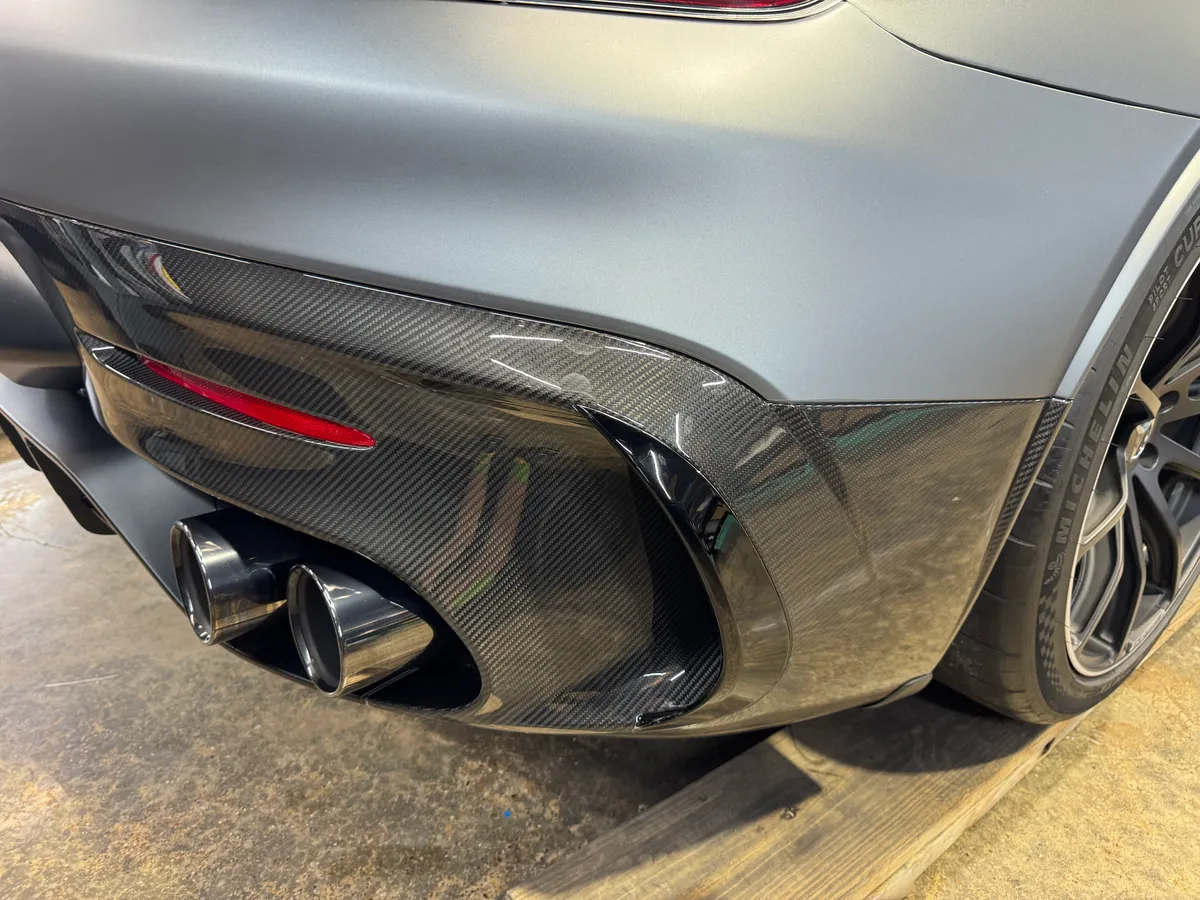
A customer walks in wanting a satin grey finish on a black car. The first question is always the same: vinyl wrap or color PPF? They look similar in photos. They cost differently. And one of them is protecting the paint underneath while the other is mostly just covering it.
That distinction is the whole decision. Vinyl wrap and color paint protection film both change the color of a vehicle, but they are not the same product doing the same job at different price points. They are two different materials with different lifespans, different durability, and a different relationship with the paint underneath. This guide lays the comparison out honestly, including the cases where vinyl is still the right call.
What Each Material Actually Is
Vinyl wrap is a printed adhesive film, usually somewhere around 3.5 mils thick. It was built for graphics and color change. Fleet branding, race livery, bold custom finishes. It does that job well and has for decades.
Color PPF is paint protection film with color built in, either pigmented through the film or printed and then clear-coated. It is the same base material as the clear PPF used to stop rock chips on a front bumper, typically 8 mils or thicker, with the same urethane construction and the same self-healing top layer. So it changes color and absorbs impact at the same time.
The thickness gap is the headline, but it is not the only difference. The construction philosophy is different. Vinyl is a color layer. Color PPF is a protection layer that happens to be colored.
Durability and Lifespan
This is where the two products separate the most.
Vinyl wrap in the DFW climate has a real-world lifespan that depends heavily on color, finish, and how the car is stored. A garaged car wrapped in a quality vinyl can look good for five to seven years. A car that lives outside under Texas sun ages faster, and certain colors and finishes, matte and satin especially, are less forgiving as they age. Vinyl can crack at hard edges over time, lift at panel corners, and fade unevenly on horizontal surfaces that take the most UV.
Color PPF carries the durability profile of paint protection film. The urethane is more UV-stable, more resistant to cracking, and better at staying put at the edges. A quality color PPF installation is generally rated for around a decade, with warranties in writing to match. Premium color films carry multi-year coverage that vinyl simply does not offer.
For a daily-driven car in Dallas heat, that lifespan difference is not a rounding error. It is often the difference between one installation and two.
Self-Healing and Paint Protection
Vinyl does not self-heal. A light scratch or wash swirl in vinyl is permanent. The vinyl also offers very little impact protection. A rock at highway speed will chip through vinyl into the paint underneath, because there is not enough material there to absorb it.
Color PPF self-heals the same way clear PPF does. Light swirls and fine scratches in the film disappear with heat, from the sun, from warm water, from a heat gun. And because it carries real thickness, it absorbs rock chips, road debris, and minor parking-lot contact the way clear PPF does on a front end.
So when you wrap a car in color PPF, you are not just changing the color. You are protecting the factory paint underneath against the exact damage that hurts resale value. With vinyl, the paint underneath is along for the ride, protected only from sun and light contamination, and still exposed to every stone on the highway.
If your priority is genuine paint preservation, this section is the answer. Color PPF protects. Vinyl mostly decorates.
Considering a color change in the DFW area? Protektd Detailing has been finishing vehicles in printed and colored films since 2022, out of our Dallas studio at 10844 Harry Hines Blvd. We will walk your car, talk through whether color PPF or vinyl is the honest fit for how you drive, and price it on the spot. Request a quote or learn more about our color PPF service.
Finish Quality and Appearance
Both materials can look excellent. Modern vinyl comes in an enormous range of colors, textures, and effects. Color-shift, brushed metal, chrome, textured carbon. The variety is genuinely broader than what is available in color PPF, and for certain wild custom finishes, vinyl is the only option.
Color PPF tends to lay with more depth and a wetter, paint-like gloss, especially in gloss finishes, because the film is thicker and the top coat behaves more like clear coat. Satin and matte color PPF finishes have a consistency that holds up well over time. The trade-off is a smaller catalog. If you want something exotic and specific, vinyl may have it and color PPF may not.
On a well-prepped car, an experienced installer can make either material look clean and seam-minimal. Finish quality on the day of install is more about installer skill than material. Finish quality three years later favors color PPF.
Removability and Reversibility
Both products are designed to come off, and this matters for leased vehicles and for anyone protecting a factory color underneath.
Vinyl removes cleanly when it is removed on time and the paint underneath is sound. Left on too long, in heat, vinyl adhesive can become difficult, and removal gets slow and sometimes leaves residue. It is still reversible, but timing matters.
Color PPF is fully removable and reversible. It comes off without damaging factory paint, and because the urethane is more stable, it tends to remove more predictably even after years on the car. The factory finish underneath is revealed in the condition it was sealed in, which is one more argument for it as a protection product rather than just a color layer.
One important clarification: color PPF is not vinyl. People sometimes use the terms loosely. They are different materials with different thickness, different durability, and different behavior. Color PPF self-heals and protects against impact. Vinyl does neither.
Cost
Vinyl wrap is the lower-cost option. That is the honest reason it remains popular. A full vinyl color change costs meaningfully less than a full color PPF installation, and for a buyer whose only goal is to change the color for a few years, that gap is real money.
Color PPF costs more, often substantially more, for a full vehicle. You are paying for a thicker, more durable, self-healing, impact-resistant film with a longer warranty. The right way to think about the price is per year of service and per dollar of paint protected, not as a flat sticker number. Spread across a decade of life plus the rock-chip protection it provides, color PPF closes a lot of that gap. It does not erase it.
Resale Value
A car wrapped in color PPF arrives at resale with its factory paint preserved underneath, protected from chips and contamination for the years the film was on. Peel the film and you have an original finish in good condition. That is a clean story for a buyer.
A vinyl-wrapped car has factory paint that has been covered but not impact-protected. If the vinyl was installed and removed correctly, the paint can be fine. If the wrap aged badly or sat too long, removal can reveal adhesive issues or uneven paint. Buyers also sometimes view a wrap as hiding something, fairly or not.
Neither outcome is automatic. But color PPF gives you the stronger position at sale time.
When Vinyl Still Makes Sense
This is not a one-sided comparison. Vinyl is the right choice in several real situations:
- Budget is the deciding factor. If a color change has to happen at a specific lower price, vinyl delivers that.
- You want a short-term or seasonal look. Planning to change the color again in two or three years? Paying for a decade of PPF durability does not make sense.
- You need a finish color PPF does not offer. Some color-shift, chrome, and specialty textures only exist in vinyl.
- Fleet, branding, or graphics. Logos, partial wraps, and commercial livery are vinyl’s home turf.
If your goal is appearance for a defined window of time, vinyl is a sensible, proven choice.
The Bottom Line
Choose color PPF when you want the color change to also be paint protection: longer life, self-healing, real impact resistance, predictable removal, and a stronger resale position. It costs more because it does more.
Choose vinyl when the priority is the look itself, at a lower cost, for a shorter window, or in a finish color PPF cannot match.
The mistake is assuming they are the same product and shopping on price alone. They are not. One is a protection film that changes color. The other is a color film that does not protect. Decide which job you are actually buying, and the choice gets simple.