
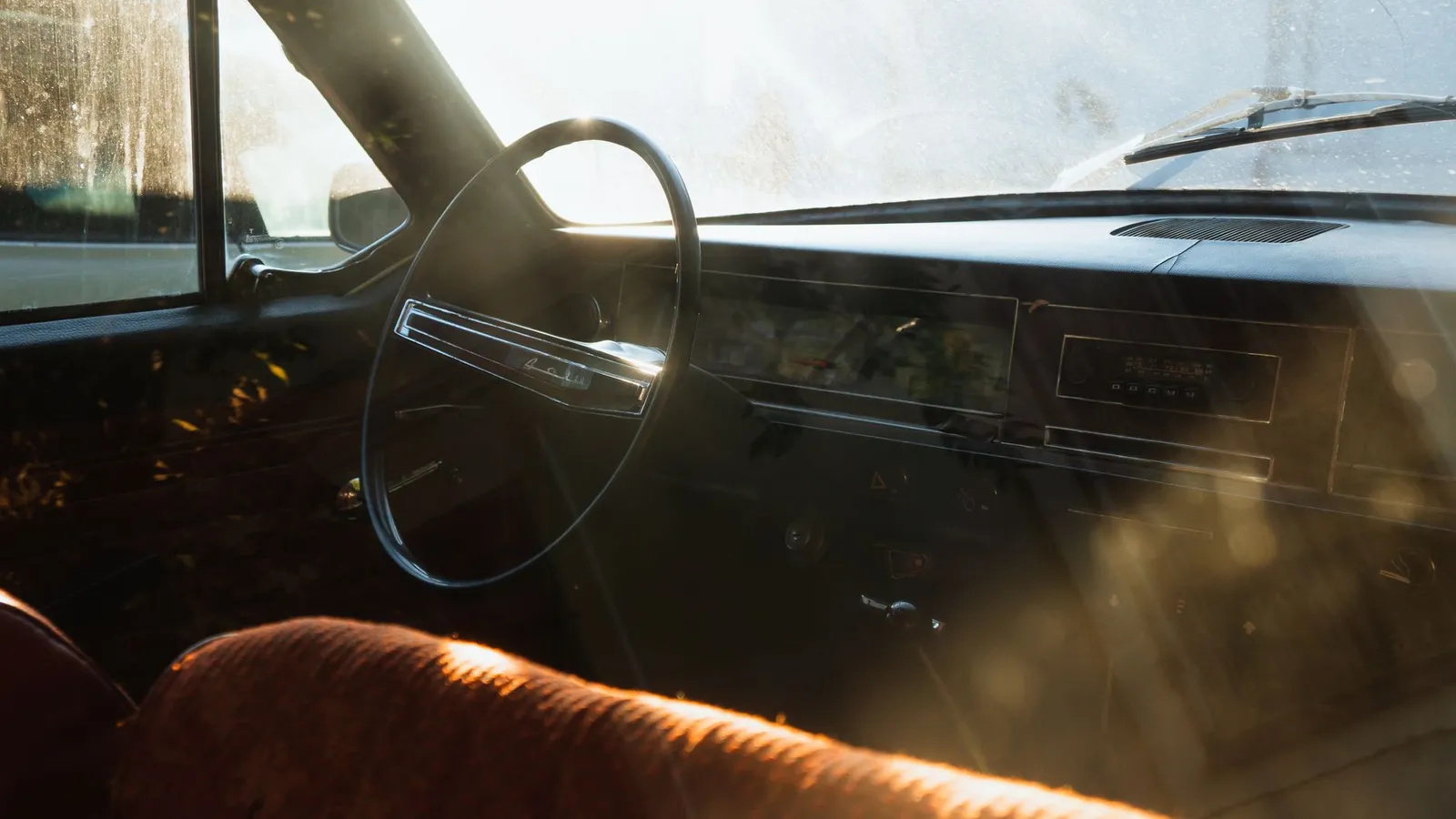
The steering wheel is the part you feel. The dashboard is the part that keeps the heat after you have gone inside. On a July afternoon in an open Dallas lot, the cabin does not cool down because you locked the doors. The glass keeps letting infrared in, the dash soaks it up, and leather, vinyl, and plastic spend hours at a temperature you would not touch.
Cracks, fading, and a sticky film on the dash are what that heat looks like after a few summers. Tint changes how much of that energy gets in. It does not turn the car into a garage.
Why the dash fails before the paint does
Paint has a clear coat and, if you are lucky, a coating or a film. The top of a dashboard has dye, soft plastic, and sometimes a stitched cover sitting in a greenhouse. Windshield glass is large, it faces the sun for hours, and Texas limits how much darkening film you can put on it. The dash is the surface that pays for that.
UV contributes to fading and to the breakdown of the materials. Infrared is what you feel as heat. They are not the same measurement. A very dark rear window can still be a weak heat film, and a legal front shade can still reject a lot of infrared if the film is ceramic. Darkness is not the product. The film construction is.
Our ceramic tier is rated at 84% infrared rejection. Ceramic IR Elite is rated at 94%. Both are the figures on the window tint page. Two front windows start at $200 on the first tier and $285 on the second. A windshield, a sunroof, and a full vehicle are quoted by the glass, because the area and the legal limit change the job.
What a windshield strip can and cannot do
Texas Transportation Code 547.613 allows a sunscreening device on the windshield that stays above the AS-1 line, or no more than five inches down from the top, whichever is closer to the top. It also has to measure 25% light transmission or more with the glass, and it cannot be red, blue, or amber. We do not run a darkening film down the glass in front of the driver.
That legal strip shades the top of the dash and the headliner. It does not shade the whole pad. A large share of dashboard aging still comes through the untinted portion of the windshield, which is why people are surprised when a legal tint job does not freeze the dash in new condition. We would rather say that before the install than after the second summer.
Front side windows are held to the same 25% VLT floor, film and glass together. Rear side glass and the back window on a passenger vehicle can be darker. Those rear windows matter for the rear shelf, child seats, and the backs of the front seats. They are not a substitute for the windshield.
The full limit, including the parts this piece does not try to be, is in Texas window tint laws.
What we see in cars that skipped tint
A cracked dash pad. A faded band exactly where the sun sat. Leather that has gone lighter on the tops of the bolsters and stayed dark in the creases. A screen bezel that warped. None of that is reversed by a new film. Tint slows the next round. It does not pull dye back into a faded panel.
If the interior is already at that point, a full detail can clean the film of skin oils and dressing residue off the surfaces. It is quoted per vehicle. It will not fill a crack in the pad. Tell us if you want the cabin cleaned while the glass is being done, or if you only want the film. They are different appointments. Tint is a studio install. A wash and an interior clean can be mobile, at your home or office. We do not install film in a driveway.
Heat rejection is not a cabin that stays cold
People ask if the car will be cool when they get in. It will be less hot than the same car with bare glass or with a tired dyed film. The air inside a closed car in direct sun is still hot. You will still want the A/C. What changes is how hard the glass radiates at you, how fast the surfaces climb, and how the interior materials age across a summer of office parking.
If you park in a garage all week and the car only sees the sun on Saturday, tint is a smaller decision. If the car sits at DFW airport, at a job site, or in an apartment lot with no cover, the glass is the protection you can add without a carport.
Ceramic film is also non-metallic, so it does not create the signal problems metal film is known for. That is a construction point, not a heat point. We still spec the tier from how you park and how much glass the vehicle has, not from a shade chart alone.
If the dash is the thing you are trying to save
Look at the top of the pad in daylight and at the rear shelf. If the fade is already sharp, say that when you request a quote. We will quote the glass that is actually feeding those surfaces, including a windshield only where the statute allows it, and we will not sell you a limo shade on the front doors to chase a problem the law does not let us solve that way.
The honest outcome is a cooler cabin and slower aging. The car will still need a wash, and the dash will still need shade when you can give it shade. Tint is the part you can do to the glass. It is not a roof.