
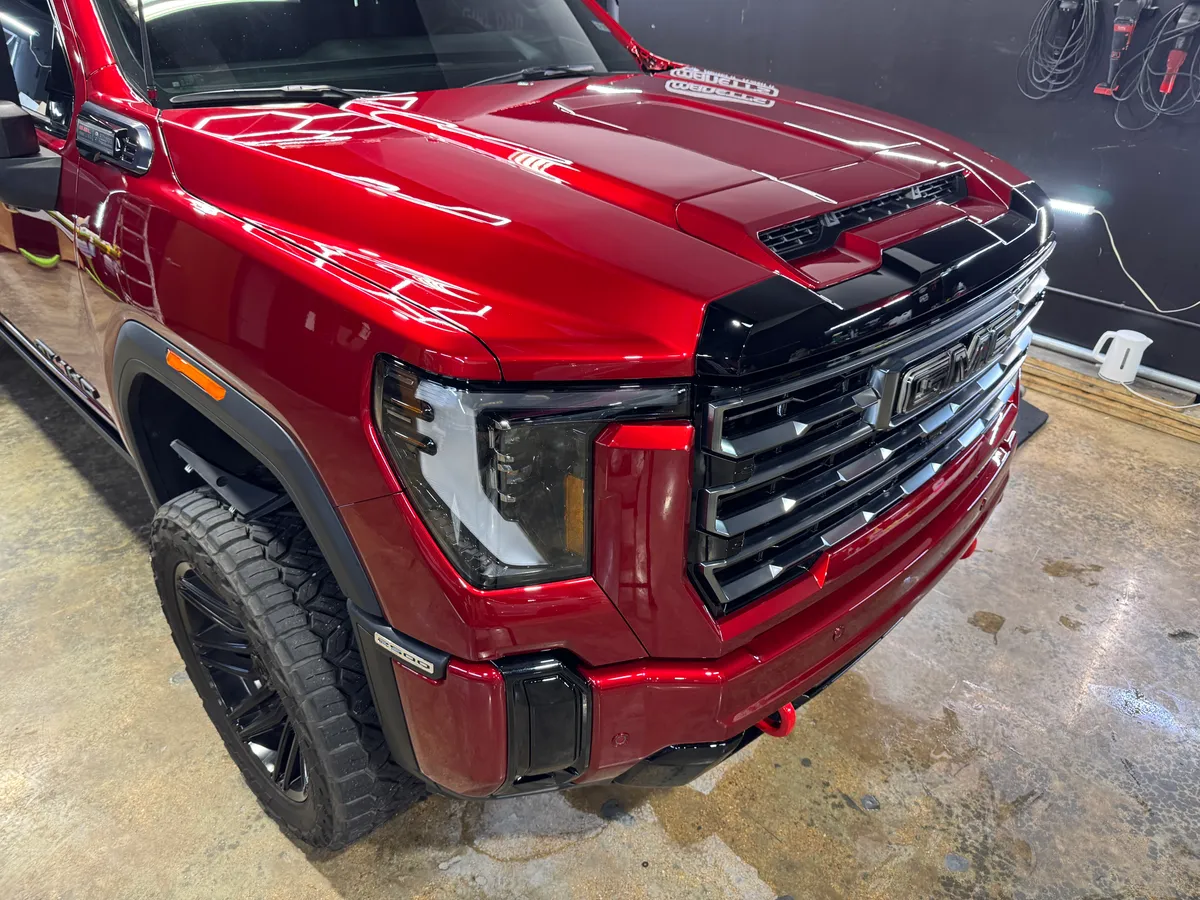
When you own one vehicle, protecting it is a personal preference. When you own twenty, or two hundred, it stops being a preference and becomes a line item, one that quietly affects resale value, brand perception, and how many vehicles are off the road on any given week.
Dallas–Fort Worth runs on fleets. Dealership inventory sitting under the Texas sun. Service vans crisscrossing the metroplex. Executive cars, rental rows, and the collector who treats a private collection like the asset it is. For every one of those operations, vehicle protection is a business case, not a detailing question. Here’s how a structured fleet program works and why the math tends to favor it.
Why Businesses Protect Their Fleets
The reasons a fleet operator invests in protection are different from the reasons an individual does, and they’re worth naming plainly.
Resale and residual value
Every vehicle in a fleet is eventually sold, traded, or returned. The condition it’s in at that moment is money. Paint that’s faded, oxidized, and chipped from years of unprotected DFW sun and highway debris sells for less, full stop. Interiors cracked by Texas heat drag down a trade appraisal.
A coating that slows oxidation, film that absorbs the rock chips, and tint that keeps interiors from cooking, applied early, protect the residual value of the whole fleet. Across a large number of vehicles, a modest per-unit difference in resale condition is a meaningful number on the books.
Brand image
For a lot of DFW businesses, the vehicle is the storefront. A service van in a customer’s driveway, a branded truck in traffic, an executive car pulling up to a client meeting, each one is a rolling impression of the company. Faded paint, swirl-marked panels, and a tired interior say something about an operation whether you intend them to or not.
For dealerships, this is even more direct. Inventory that sits on a Dallas lot through a brutal summer needs to still look showroom-fresh when a buyer walks the row. Protection is what keeps it that way.
Downtime reduction
Fleet operators think in vehicle-hours. A truck in a shop is a truck not earning. Protected surfaces are faster and easier to clean, more resistant to the contamination and minor damage that otherwise pile up, and less likely to need correction or paint repair down the line. Less reactive work, fewer surprises, more predictable scheduling. For a fleet, predictability has real value.
What a Fleet Protection Program Covers
A fleet program isn’t a stack of individual appointments billed together. It’s a structured arrangement built around how a business actually operates. Protektd’s Fleet Protection service is built for exactly this. A typical program includes the following elements.
Volume pricing
The economics of doing twenty vehicles are not the economics of doing one. Scheduling, logistics, and throughput all improve at volume, and that efficiency is reflected in fleet pricing. Rather than every vehicle being a separate retail transaction, a fleet program is quoted as a program, with pricing that accounts for the scale of the commitment.
The right protection products, applied at scale
A fleet program draws on the same professional-grade products as any single-vehicle job, matched to how the fleet is used:
Ceramic coating for paint that needs UV defense and easier cleaning across a large number of vehicles, the practical default for service fleets and dealership inventory exposed to the DFW sun.
Paint protection film for the high-mileage, high-impact vehicles where rock chips and road debris are the real threat, often applied to front-end panels rather than full coverage, to put the protection budget where the damage happens.
Window tint, specifically heat-rejecting ceramic film, to protect interiors from cracking and fading and to keep cabins workable for the people who drive them all day. Texas tint law applies to fleet vehicles the same as any other, and a proper program keeps every vehicle compliant.
A good fleet consultation isn’t about selling every product on every vehicle. It’s about matching the protection to the role each vehicle plays, so the budget goes where it returns the most.
Scheduled maintenance
Protection products perform best when they’re maintained, and coatings in particular have inspection and maintenance schedules tied to their warranties. A fleet program builds that maintenance into a schedule, so vehicles cycle through on a predictable rotation instead of being remembered only when something looks wrong. That keeps coverage in force, keeps the fleet looking consistent, and keeps maintenance from becoming a fire drill.
Running a fleet in DFW and want to know what protecting it would actually cost? Tell us the size of the fleet, the vehicle types, and how they’re used, and we’ll build a custom program around it. Request a fleet quote and we’ll put real numbers in front of you.
How Fleet Quoting Works
Fleet pricing can’t be pulled off a menu, because no two fleets are alike. A quote is built specifically for your operation, and the process is straightforward.
We start with a conversation about the fleet. How many vehicles, what types, how they’re used, where they’re stored, and what the goal is. A dealership protecting inventory has different priorities than a service company protecting working vans, and a collector protecting appreciating assets is different again.
We assess the vehicles. Newer vehicles and older ones need different things, paint already showing oxidation may need correction before coating, while fresh inventory may just need protection applied. An honest assessment of current condition is part of an accurate quote.
We match products to roles. Not every vehicle gets every product. We recommend the protection that fits how each class of vehicle is used, so the program is efficient rather than padded.
We build the schedule and the pricing together. Logistics matter as much as the per-vehicle work, how vehicles cycle through with minimal disruption to your operation, and how maintenance fits into the calendar. The pricing reflects the scale and the structure of the whole program.
The result is a single, custom program with predictable costs and a clear schedule, rather than a pile of unpredictable one-off invoices.
Who Fleet Programs Are Built For
Fleet protection isn’t only for businesses with hundreds of vehicles. In practice, the program fits a range of DFW operations:
Dealerships protecting inventory through the Texas summer and offering protection packages as an add-on to buyers.
Service and trade companies with branded vans and trucks that double as marketing and need to look the part across Dallas, Fort Worth, Plano, Frisco, McKinney, Allen, Richardson, Irving, Arlington, and the surrounding cities.
Companies with executive or pool vehicles where appearance reflects on the brand and resale value matters at end of term.
Rental and leasing operations where vehicle condition directly drives both customer perception and residual value.
Private collectors with multiple vehicles, where consistent, scheduled care protects assets that are meant to hold or grow in value.
If you operate more than a handful of vehicles, a structured program is almost always more cost-effective and less hassle than handling each one separately.
The Bottom Line
For a Dallas business, fleet vehicle protection is a financial decision dressed up as a detailing one. It protects resale and residual value across every vehicle you’ll eventually sell or return. It keeps branded vehicles looking like the company wants to be seen. And it reduces the reactive, unpredictable maintenance that pulls vehicles off the road.
A real fleet program brings volume pricing, the right protection matched to each vehicle’s role, and a maintenance schedule that keeps it all performing, built around how your operation actually runs. Protektd’s Fleet Protection service exists to do exactly that for DFW businesses. If you run a fleet and want to see what a program would cost, request a fleet quote and we’ll build the numbers around your operation.