
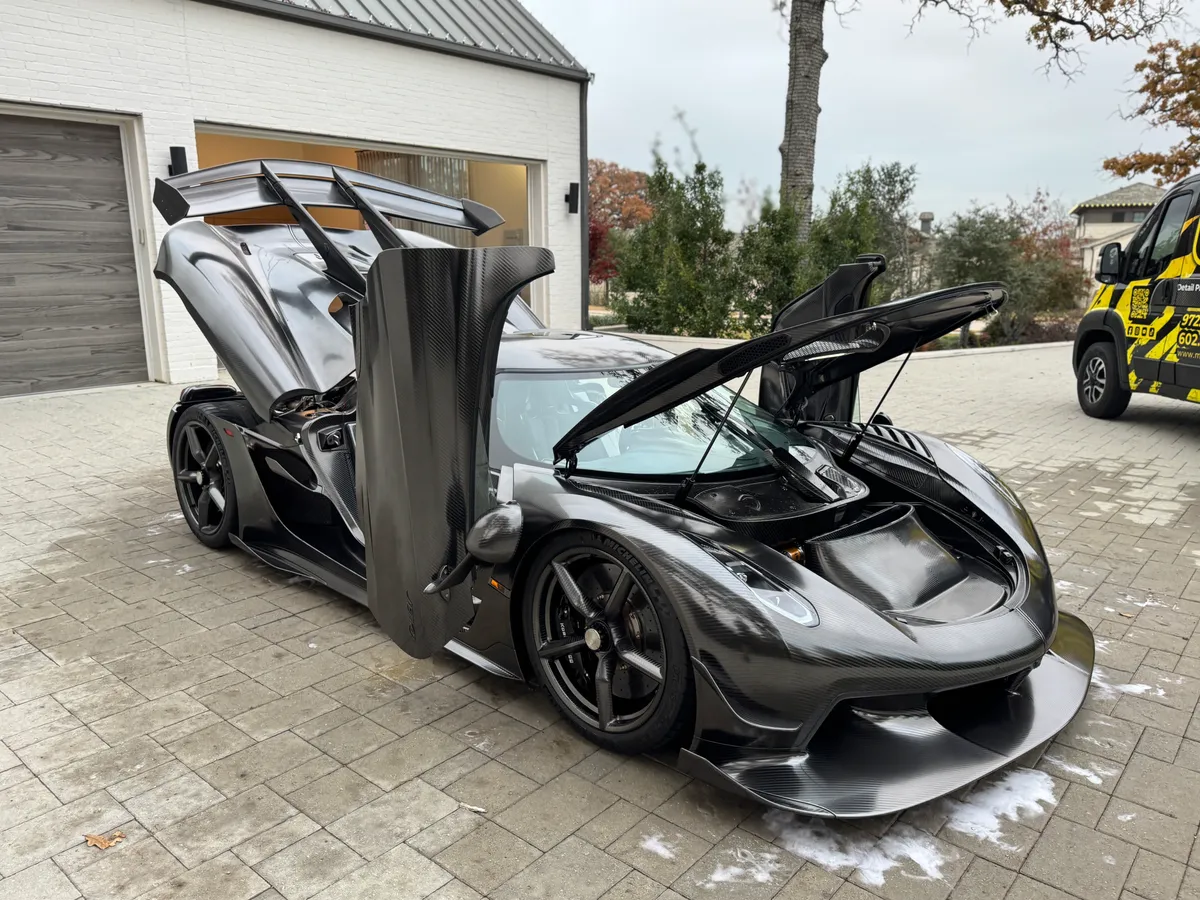
The Garage Is Doing More Than You Think
Most car owners who park in a garage every night assume their vehicle is in reasonably good shape. And compared to street parking in Dallas heat, they are right. A garage cuts UV exposure significantly. It keeps acid rain off the clearcoat overnight. It shields the car from the hail that rolls through DFW every spring and catches people off guard every single time.
But I have inspected hundreds of garaged cars here in North Texas, and almost all of them show the same thing: oxidation creeping in at the edges, water spots etched into the horizontal panels, and paint that has lost its depth without the owner ever really noticing it happening. The damage is quieter than a hailstorm. That is exactly what makes it easy to miss until it is expensive to address.
A garage removes some threats. It does not remove most of them.
What Actually Gets Through
Think about how a vehicle in DFW actually lives. It leaves the garage in the morning, sits in a parking lot on a concrete slab that reflects heat upward all day, and runs through construction zones on 635 or 75 where rock chips are routine. Then it sits in afternoon sun. Then it comes home.
The garage hours are eight, maybe ten hours out of twenty-four. Everything else is the car’s problem.
Here is what the garage cannot touch:
- UV degradation that accumulates on every daytime drive and every outdoor parking stop. Texas sun is not gradual. It is aggressive, and clearcoat does not recover from UV damage on its own.
- Rock chips and road debris from highways, construction zones, and the perpetual road work that defines DFW driving. A chip happens in a fraction of a second, and no parking behavior prevents it.
- Fallout and industrial contamination. DFW sits in a corridor with significant air traffic, heavy freight, and rail activity. Iron particles from brake dust and rail dust bond to paint at a molecular level. You cannot rinse them off.
- Improper washing. This is one of the most common sources of paint damage I see, and it has nothing to do with the weather. Automatic car washes, abrasive mitt technique, and dirty towels create swirl marks and micro-scratches that dull the finish over time.
- Hail, whenever the car is not home. And in DFW, the storm rarely waits for you.
- Bird droppings and tree sap. Both are acidic. Both etch into clearcoat fast, especially in summer heat. A garaged car still parks under trees and near birds all day.
The point is not to be discouraging. The point is to be accurate about what you are actually protecting against and what you are not.
What Paint Correction Addresses, and What It Does Not
When a car comes into Protektd with existing swirl marks, water spot etching, or light oxidation, the first honest conversation is about paint correction. Correction removes a controlled, thin layer of clearcoat to level the surface and eliminate the defects. Done properly, it restores genuine gloss and clarity.
What it does not do is add any protection. A corrected car is a clean canvas. It is still just as vulnerable to the sun on the drive home as it was before the work started. Correction makes sense as a first step. It rarely makes sense as the only step.
You can read more about how that process works at Protektd’s paint correction service.
Coatings and Film: Different Tools for Different Problems
This is where I want to be direct, because there is a lot of noise in the industry about what these products do.
A ceramic coating, applied correctly on a properly prepared surface, creates a hard, semi-permanent layer over your clearcoat. It repels water, makes the surface easier to clean, and provides meaningful resistance to UV, light chemical exposure, and minor contaminants. A quality coating will last multiple years with proper maintenance. It is not permanent. It does not self-heal. If something sharp contacts it with enough force, it will scratch.
What a coating does exceptionally well is reduce the accumulation of minor damage over time and make maintenance far easier. That matters in Texas because the car is being cleaned more often and exposed to more contaminants than it would be somewhere with milder weather.
Paint protection film is a different tool. A quality PPF is thick, flexible, and absorbs impact energy in a way that a coating cannot. It will take a rock chip that would scar your clearcoat and, given heat, self-heal. It is the right answer for high-impact zones: the front bumper, hood leading edge, mirrors, rocker panels. Anywhere that accumulates road debris.
| Protection Type | Strongest Against | Does Not Cover |
|---|---|---|
| Ceramic Coating | UV, chemical fallout, water spots, light contamination | Rock chips, deep scratches, impact damage |
| Paint Protection Film | Rock chips, road debris, impact, abrasion | Heavy UV without coating on top, iron fallout without maintenance |
| Window Film (KAVACA) | UV through glass, interior heat, solar glare | Paint on the exterior, anything outside the glass |
| Paint Correction | Existing swirl marks, water spots, light oxidation | Future damage, adds no barrier |
A layered approach, correction first, film on high-impact zones, ceramic coating over everything, is not about upselling. It is about each product doing what it is actually built to do.
You can look at the full paint protection film options at /services/paint-protection-film.
What Maintenance Looks Like After Protection
This is where I see people lose the investment they have already made. They spend appropriately on good protection and then run it through an automatic wash twice a month. The coatings in our Manett’s line are formulated to be durable, but no chemistry survives sustained abrasive contact indefinitely.
A protected car in DFW still needs regular maintenance. It just needs the right kind. That means pH-neutral soaps, clean microfiber, and periodic decontamination to pull out the iron fallout that bonds to every car regardless of what is on top of the paint. In this part of Texas, a decontamination step is not optional if you care about the finish. The airborne particulate load is real.
The good news is that a properly coated car is significantly easier to wash. Contamination releases faster. You spend less time and less effort. That is a genuine functional benefit, not a marketing claim.
The Honest Takeaway
A garage is worth having. Use it. But do not mistake it for a complete strategy. The bulk of the damage that finds a DFW vehicle happens in the hours between leaving and returning, on roads that are hard on paint and under a sun that does not take a day off.
What protects a car comprehensively is understanding which threats are real for this specific climate and driving environment, and then choosing the right tools for each one. That means correcting what exists, protecting what is vulnerable, and maintaining the protection consistently. None of it is complicated. All of it is worth doing if the car matters to you.