
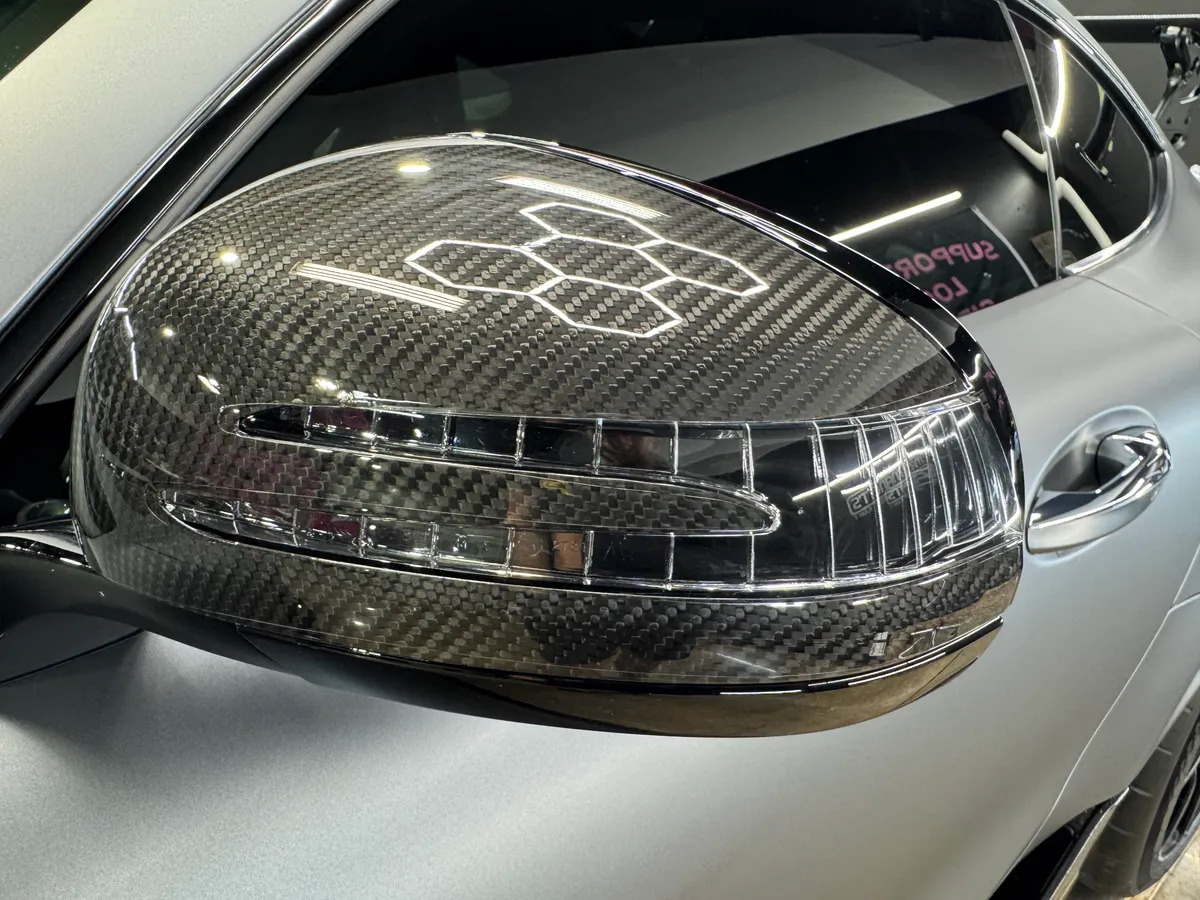
What DFW Hail Actually Does to a Car
Most people picture dime-sized dents when they think about hail damage. What we see in the shop after a North Texas storm is more complicated than that. A fast-moving cell can drop pea-sized stones for four straight minutes and leave a hood looking like hammered sheet metal. It can also leave stone chips from gravel thrown up by highway traffic, and it can strip wax or sealant from a panel that barely got touched directly. The damage is cumulative, and it happens fast.
Dallas hail season runs roughly March through June, with a secondary window in the fall. We sit at the intersection of Gulf moisture and cold fronts dropping out of the Rockies, and that combination produces some of the most severe convective activity in the country. The DFW Metroplex averages two to four significant hail events per year. Some years are quiet. Some years are not. If you own a vehicle you care about, the question is not whether you should think about protection. It is which protection actually makes sense for the risk.
Let us go through what exists, what each option does, and where each one stops.
Wax and Sealant: Good Tools, Wrong Job
Wax and paint sealants have real value. They make washing easier, they add gloss, and they provide a modest barrier against light contamination like water spots and industrial fallout. On a DFW summer, where you might park under cottonwood trees or get caught in a construction-dust storm on the tollway, that matters.
But wax and sealant do nothing against hail impact. Nothing. The film is too thin and too soft to absorb or deflect kinetic energy. A hailstone striking at terminal velocity goes straight through any wax layer and deforms the metal underneath. If someone tells you that a particular wax or spray sealant will protect your car from hail, they are either confused or not being straight with you. These are paint maintenance products. They belong in a maintenance program. They are not impact protection.
Ceramic Coatings: Real Benefits, Real Limits
Ceramic coatings have become the most requested service at our shop over the past several years, and a lot of that popularity is deserved. A properly applied professional coating bonds to the paint surface, creates a chemically resistant layer rated at 9H pencil hardness, and can last anywhere from three to seven years depending on the product tier and how the car is maintained. That is a meaningful upgrade over wax or sealant in terms of durability and resistance to chemical etching, UV degradation, and light swirl marks.
What ceramic coatings do not do is absorb impact. The hardness that makes them resistant to marring does not translate to hail protection. A 9H rating reflects pencil hardness on a coating scale. It does not mean the surface resists a 0.75-inch stone moving at sixty feet per second. That physics problem belongs to a different class of material entirely.
Ceramic coatings also do not self-heal. If the coating is scratched deeply, it stays scratched until it is corrected. That is a fact worth knowing before you invest in one.
Where coatings genuinely earn their place in a hail-season strategy is indirect. A coated surface sheds water faster, which reduces the window spotting and mineral deposits that follow a storm. It makes post-storm cleanup significantly easier and reduces the risk of compound contamination during any correction work that follows. Think of it as making everything after the event more manageable, not as preventing the event’s effects.
Paint Protection Film: The Closest Thing to Actual Impact Defense
Paint protection film is in a different category, and the reason is straightforward. PPF is a thermoplastic urethane film, typically between 6 and 8 mils thick. It is flexible, and it has the ability to absorb and distribute impact energy in a way that thin, hard coatings simply cannot. For smaller hailstones, particularly in the pea-to-marble range, a quality film installation can prevent or significantly reduce panel denting. Larger stones, the golf-ball-to-baseball range that comes out of a supercell, can still cause damage. Film is not a guarantee. No product is.
The self-healing property of modern PPF is real and worth understanding correctly. Minor surface scratches and swirl marks disappear with heat exposure, either from sunlight or warm water. That means the film surface stays looking clean over time in a way that coatings do not. The healing happens at the film level, not at the paint level.
Full-vehicle PPF installations are the most comprehensive protection available today. Partial coverage options, such as a full hood, fenders, and roof, address the panels most exposed to falling hail and road debris. The tradeoff is cost and coverage area. Full wraps on a performance vehicle or truck can run several thousand dollars depending on size and film tier, and that is an honest range, not a teaser number.
Window Film and Hail
This comes up often, and it is worth addressing directly. Hail rarely breaks tempered automotive glass unless the stones are very large. Windshields are laminated and highly resistant. What window film does address is the glass surface in the aftermath: flying debris can create micro-abrasions, and UV protection matters regardless of storm season. Ceramic Pro KAVACA window film is what we use here for its optical clarity and heat rejection. But window film is not an anti-hail product. It serves a different set of needs, mostly heat load, UV rejection, and privacy, and it serves those needs well.
How to Think About Your Actual Exposure
The right protection choice depends on a few honest questions about how you use the vehicle.
| Situation | Most Relevant Protection |
|---|---|
| Daily driver, outdoor parking | PPF on high-exposure panels + ceramic coating |
| Garaged most nights, occasional exposure | Ceramic coating with maintenance detail routine |
| Collector or low-mileage vehicle | Full PPF + coating over film |
| Lease vehicle | Ceramic coating to protect from minor damage at turn-in |
| New vehicle purchase | PPF or coating within first 30 days, before stone chips accumulate |
The biggest mistake we see is people making these decisions reactively, after a storm hits rather than before. By then the conversation shifts from protection to repair, and repair is always more expensive than prevention. A good paint correction before a coating or film installation is standard practice. If damage is already present, correction comes first. That sequence matters.
The Practical Takeaway
No product stops every hailstone. Anyone who tells you otherwise is overselling. What protection does is shift the odds, reduce the severity of outcomes, and make recovery faster and cheaper when something does happen. PPF gives you the best mechanical defense for direct impact. Ceramic coating gives you the best surface durability and post-event cleanup experience. Wax and sealant belong in regular maintenance, not in a protection strategy.
If you park outdoors in DFW and you own a vehicle you intend to keep, this spring is the right time to look at your current coverage honestly. Not because the marketing says so. Because the weather in North Texas does not wait for you to get around to it.