
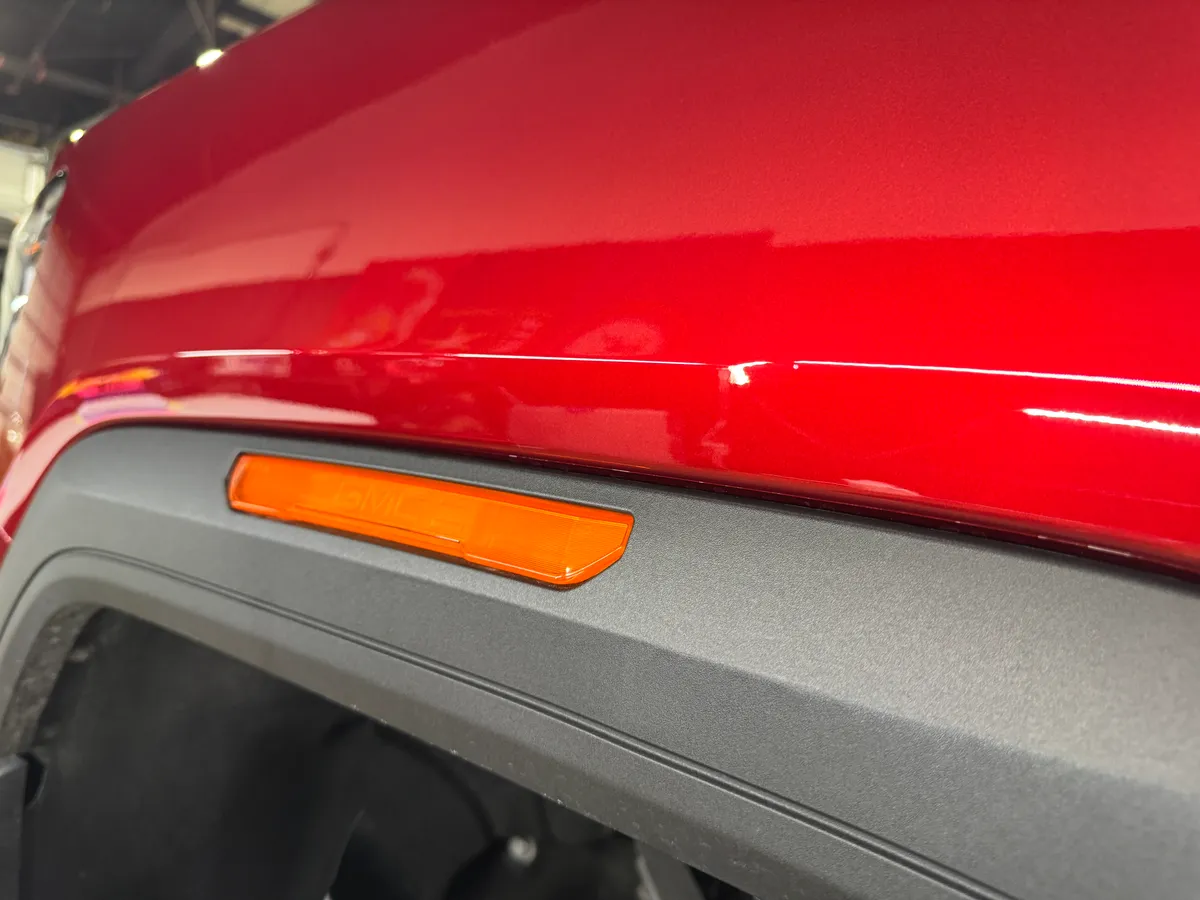
What Matte PPF Actually Is
Matte paint jobs come through the Protektd studio about twice a week. Almost every owner walks in with the same concern: they love the look, they’re not sure how long it lasts, and they’ve heard horror stories about machine polishers destroying the finish. Those concerns are all legitimate. The good news is that matte paint protection film addresses most of them directly. Understanding how it does that, and what it still can’t do, makes the decision a lot cleaner.
Matte PPF is a thermoplastic urethane film applied over your paint, just like gloss PPF. The difference is in the topcoat layer. Manufacturers engineer the surface texture to scatter light rather than reflect it directly back at your eye. That scattered reflection is what produces the flat, satin appearance. The film itself is clear. It bonds to the paint underneath, and the matte effect comes entirely from that engineered surface, not from any pigment in the film.
One thing worth clarifying early: matte PPF is a subcategory of color PPF in the way Protektd talks about it. Color PPF includes any film that changes or alters the visible finish, as opposed to standard clear films that preserve a glossy paint surface invisibly. Matte is the most popular finish in that category by a wide margin, at least in the DFW market.
Why Matte Finishes Need More Protection, Not Less
Here’s the problem a lot of matte owners don’t anticipate. Flat and satin finishes, whether from the factory or a wrap, have microscopic surface texture that traps contaminants more aggressively than smooth gloss paint does. Road grime, brake dust, and the fine particulates you collect on the highway between Dallas and Fort Worth all settle into that texture. Once they’re there, you have very limited options for removing them.
You can’t machine polish a matte finish. The abrasive action smooths out the surface texture, which kills the matte effect immediately. That means any correction work on bare matte paint is largely done by hand, slowly, with products that won’t alter sheen. It’s time-consuming and not always fully effective.
Texas heat makes this worse. Contaminants bake onto paint faster here than in most of the country. A car sitting in a parking lot in Plano or Irving in July, with temperatures at 105 degrees on the roof panel, is essentially baking whatever is on the surface into the clear coat or the finish layer. On a matte car without protection, that accelerates the staining and etching that eventually forces a repaint or a wrap replacement.
Matte PPF removes this vulnerability almost entirely. The film sits between the environment and your paint. If the film surface gets contaminated, stained, or etched by bird droppings or bug acids, you’re not dealing with damaged paint. You’re dealing with a damaged film, which can be corrected or replaced at far lower cost. That’s the core practical argument for it.
What the Film Actually Does in Practice
The self-healing property is worth explaining clearly because it’s often misunderstood. The topcoat layer of quality matte PPF is formulated to flow back toward its original texture when heat is applied. Light surface marring, fine swirl marks from a wash mitt, or minor scratches from contact with foliage or a jacket zipper will relax and largely disappear with heat exposure. In the Texas summer, ambient heat handles most of this passively. You can also accelerate it with warm water or a heat gun.
This self-healing behavior applies to surface-level marks. Deep gouges, punctures, or impacts that penetrate the film fully will not heal. The film will hold the damage in place rather than letting it reach your paint, which is still a meaningful benefit, but that section of film will need to be replaced.
The film also resists chemical etching from bird droppings and bug acids more effectively than bare paint. That resistance is not unlimited. A bird dropping left on any surface in this heat for several days can still etch the film. The film just buys you more time and more margin for error than bare paint does.
Here’s a quick comparison so the performance picture is clear:
| Concern | Bare Matte Paint | Matte PPF |
|---|---|---|
| Machine polishing safe | No | No, but rarely needed |
| Self-healing from light scratches | No | Yes, with heat |
| Chemical etch resistance | Low | Moderate to high |
| Bird dropping damage | High risk | Low to moderate risk |
| Replaceability if damaged | Repaint or refinish | Replace film section |
| Wash-friendly | Limited options | Standard hand wash safe |
Maintenance on a Matte PPF Car in DFW
The maintenance approach changes with a matte film on the car, mostly for the better. You still need to avoid automated brush car washes. Those brushes aren’t appropriate for any PPF, matte or gloss, because they can lift film edges and introduce swirls into the surface texture. Touchless automated washes are less damaging but still not ideal for long-term film care. A proper hand wash at home or through a maintenance detail is the right approach.
Products matter with matte. Anything that adds gloss, such as spray waxes, most traditional paste waxes, and many detail sprays, will alter the matte surface and produce uneven sheen. You need products specifically formulated for matte or satin surfaces. Manett’s makes products in this category. The chemistry is designed to clean and protect without filling the surface texture or adding optical clarity that changes the finish character.
One thing DFW drivers should know: the combination of construction dust from ongoing highway and tollway work, coupled with summer heat, means matte surfaces pick up a fine gritty film faster here than in cooler, less construction-heavy markets. Plan on rinsing the car more frequently than you might have with a previous gloss vehicle. It takes less time than a full wash and removes the abrasive particulate before it works into the surface texture under the next day’s heat.
Where Ceramic Coating Fits In
A ceramic coating applied over matte PPF is a legitimate step that some owners take. The coating bonds to the film surface and adds a layer of chemical resistance and hydrophobicity. Water sheets off more aggressively, bird droppings slide off more easily before they can etch, and maintenance washing becomes faster.
The coating does not make the surface self-healing. That is the film’s job. The coating also does not protect the film from physical impacts. What it adds is chemical and environmental protection on top of the film’s mechanical protection.
The coating on matte PPF is formulated at a lower hardness level than what would go over gloss paint. A very hard 9H-rated coating over matte film can alter the finish appearance and reduce the self-healing capability by making the topcoat rigid. Shops working at a serious level know to match coating hardness to the substrate underneath. Worth asking about if you go this route.
The Honest Takeaway
Matte PPF is one of the more practical combinations of aesthetics and protection available right now. It preserves a finish that cannot be polished, extends the window for correcting contamination damage, and self-heals from the kind of minor contact marks that daily driving in a city inevitably produces. It is not impervious to everything, and it does require a different maintenance approach than gloss paint.
If you own a matte or satin finish vehicle and you drive it regularly here in DFW, the question is not really whether to protect it. The question is how long you want to wait before doing it. The longer a matte finish goes unprotected, the fewer correction options you have if something goes wrong.