
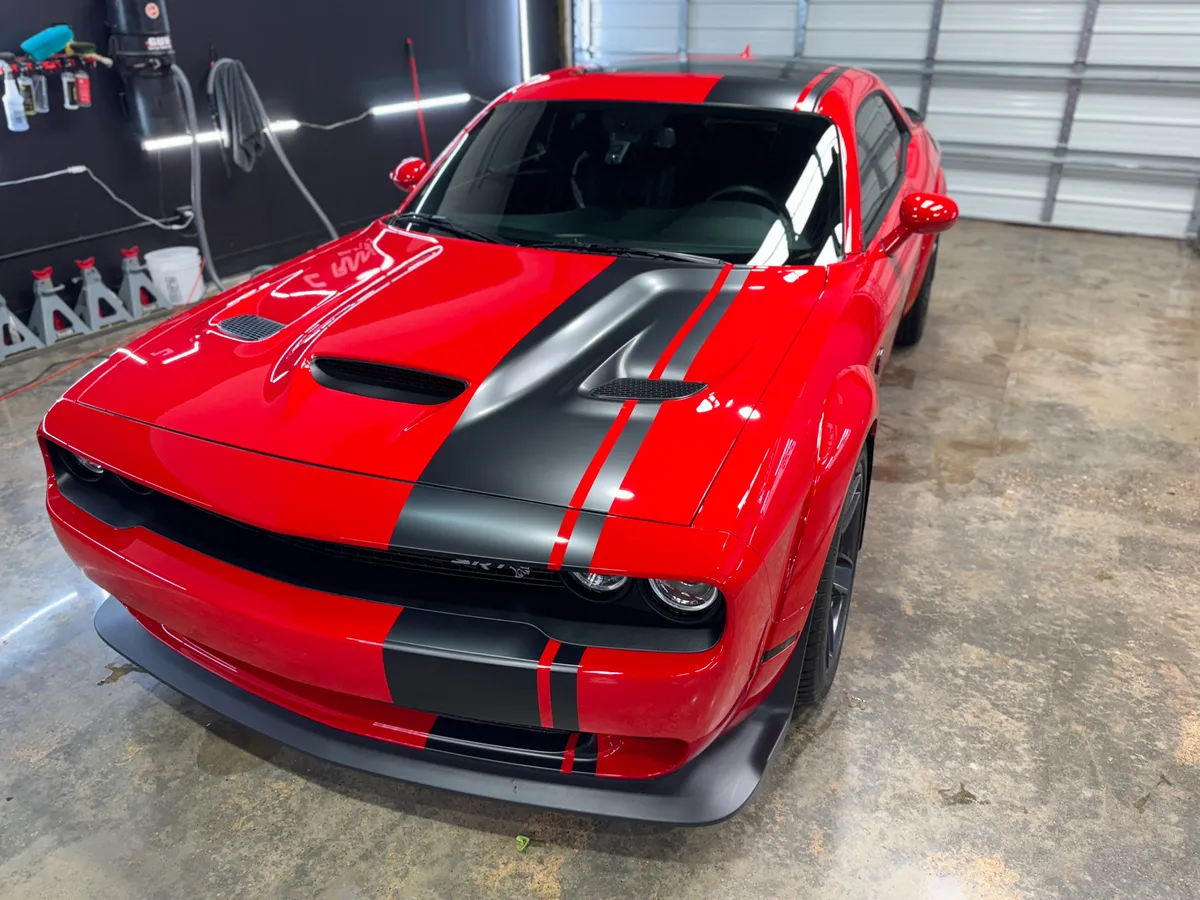
The day you drive a new car off the lot is the best your paint will ever look — and the clock starts immediately. DFW highways throw gravel. The Texas sun goes to work on the clear coat and the dash the first afternoon. Love-bug season, construction dust, and hard-water sprinklers are all waiting. Every week you drive unprotected, your “new” baseline erodes a little.
The good news: the first few weeks of ownership are the cheapest, easiest window to lock that baseline in. The paint hasn’t accumulated swirl marks or chips yet, so there’s nothing to correct or repair first — you’re protecting a clean canvas. This is a sequenced checklist for doing exactly that, built for Dallas conditions.
Why Early Beats Waiting
Every protection service is easier, cheaper, and more effective on fresh paint. Here’s the logic.
A ceramic coating seals in whatever is on the paint underneath it. Coat a new car and you seal in a flawless finish. Wait two years and you’re likely paying for paint correction first to remove the swirl marks and wash damage that accumulated — correction you wouldn’t have needed if you’d protected it early.
Paint protection film works the same way. PPF applied to undamaged paint protects perfect paint. PPF applied over existing rock chips just covers damage that’s already done. The film can’t undo what already happened on the highway.
Waiting doesn’t save money. It moves the spending into a bigger bill later — correction plus protection instead of just protection. Acting early is the genuinely economical choice.
One practical note on timing: modern factory paint is fully cured when the vehicle is delivered, so there’s no need to “wait for the paint to cure” before coating or filming. The myth about waiting months applies to repainted panels, not factory finishes. You can protect a new car right away.
The New-Car Protection Checklist
Work through these in order. Steps 1 and 2 are diagnostic. Steps 3 through 6 are decisions and installs.
1. Inspect the paint before you do anything
A “new” car is not automatically a perfect car. Vehicles pick up wear in transport, in dealer lots, and from dealer-applied car washes. Before any protection goes on, the paint needs a careful inspection — ideally under proper lighting — for swirl marks from a dealer wash, transport scuffs, water spots, and any panel that doesn’t match.
This matters because if there are defects, they need to be corrected before a coating or film goes on. Protecting flawed paint just preserves the flaws. Most new cars need little or nothing here — but you want to know, not assume.
2. Decontaminate the surface
Even a brand-new car has accumulated bonded contamination — rail dust from transport, industrial fallout, lot grime that a normal wash won’t remove. Before protection is applied, the paint gets a proper multi-stage wash and decontamination so that whatever you put on top bonds to clean paint, not to a layer of embedded grit.
This is non-negotiable prep. A coating or film applied over contamination adheres poorly and underperforms. On a new car the decon is usually quick, but it has to happen.
3. Decide on paint protection film (the physical layer)
Now the real decisions begin. PPF is your only true defense against rock chips, road rash, and abrasion — a coating cannot do this job. The question is coverage, and it comes down to how you drive.
- Partial front (bumper, partial hood) — the budget entry point. Covers the highest-impact zone for lighter highway use.
- Full front (bumper, full hood, fenders, mirrors, often headlights and A-pillars) — the most popular choice for DFW daily drivers, because it covers where nearly all highway chip damage lands.
- Full vehicle — every painted panel, the choice for new exotics, collector cars, and anyone wanting maximum paint preservation.
If you commute on DFW highways — and most of us do — full-front PPF is the package that earns its keep. PPF is also self-healing: light swirls and marring in the film fade with heat, which a ceramic coating cannot do.
4. Decide on ceramic coating (the chemical layer)
A ceramic coating does a different job than film. It adds deep gloss, makes the surface hydrophobic so water and grime sheet off, makes washing easier, and provides strong UV and chemical-etch resistance — all things that matter intensely under the Dallas sun. What it does not do is stop rock chips, and it isn’t permanent or self-healing. Film and coating are partners, not competitors.
On a new car you have three sensible paths:
- Coating only — gloss, easier maintenance, and UV protection, without impact protection. Reasonable for garage-kept cars or lighter use.
- PPF only — physical protection on the panels that need it, leaving the rest factory.
- PPF plus coating — film on the high-impact panels, coating over the whole car (including over the film). This is the comprehensive approach: chip protection where you need it, gloss and chemical resistance everywhere.
5. Decide on window tint
Tint isn’t just an aesthetic choice in Texas — it’s comfort and protection. Quality window tint rejects heat and blocks UV, which keeps the cabin cooler, reduces strain on your A/C, and protects your dash, seats, and trim from the sun fading and cracking them. Professional-grade ceramic film is what we install, engineered for high heat-rejection without the signal interference of older metallic films.
For a new car, getting tint done early means your interior is protected from day one rather than after a season of sun has already started working on it. Texas has specific legal limits on how dark front windows can go — a professional installer keeps you compliant while maximizing the heat and UV performance.
6. Sequence the installs correctly
Order matters when you’re combining services. The correct sequence is:
- Inspection and decontamination — always first.
- Paint correction — only if the inspection found defects. Done before any film or coating.
- Paint protection film — applied to bare, corrected paint.
- Ceramic coating — applied last, and it can go over both bare paint and the PPF, unifying the look and adding hydrophobics across the whole car.
- Window tint — independent of the paint work and can be done in the same visit.
Getting this order wrong is costly. A coating applied before PPF, for instance, has to be removed where the film goes. A reputable studio plans the whole sequence in one consultation so the work flows correctly and you’re not paying to redo a step.
Not sure which combination your new car actually needs? That’s exactly what a consultation is for. Bring your new vehicle to Protektd’s studio at 10844 Harry Hines Boulevard — we inspect the paint, walk you through PPF, coating, and tint honestly, and build a sequenced plan around how you actually drive. Start with a free quote.
A Quick Decision Guide
If you want the short version, here’s how most new-car owners in DFW should think about it:
- You commute on highways and want it protected properly: full-front PPF, ceramic coating over the whole car, and ceramic window tint. The complete package.
- You’re budget-conscious but want the essentials: partial or full-front PPF on the impact zones, plus window tint. Add a coating later if you want.
- The car is mostly garage-kept and lightly driven: ceramic coating and window tint, with PPF optional based on your comfort with chip risk.
- It’s an exotic, a collector car, or a long-term keeper: full-vehicle PPF and ceramic coating. Maximum preservation of a car you intend to keep pristine.
There’s no single right answer — the right answer is the one that matches your driving, your budget, and how long you plan to own the car.
The Bottom Line
A new car gives you a narrow, valuable window: flawless paint, nothing to correct, nothing to repair, and the lowest-cost path to keeping it that way. The checklist is straightforward — inspect, decontaminate, then make clear-eyed decisions about PPF for impact, ceramic coating for gloss and chemical resistance, and tint for heat and UV, installed in the correct sequence.
DFW is hard on cars. The sun, the highways, the construction, the hard water — none of it waits. Protect the car early and you preserve the version of it you fell for on the lot. Wait, and you’ll spend more later buying back ground you didn’t have to give up.