
The Question Most People Ask Too Late
Most Fort Worth vehicle owners start looking for a PPF installer after something goes wrong. A chip appears on the hood of a truck they bought three months ago. A road-rash strip shows up along the rocker panels after a highway stretch on I-30. By that point, the conversation shifts from protection to damage control, and that is a harder, more expensive place to be.
The Dallas-Fort Worth metroplex is genuinely hard on paint. Construction aggregate gets kicked up constantly on 35W and 820. The heat here is not a minor variable. Summers push surface temperatures on dark-colored hoods well past 160 degrees Fahrenheit, which accelerates any existing weakness in a film installation. And the wind in North Texas carries fine particulate that acts like a slow abrasive over time. Paint protection film is one of the few products that actually addresses this environment rather than just looking good in a showroom photo.
But the film is only as good as the installation. That point cannot be overstated.
What PPF Actually Does, and What It Does Not
Paint protection film is a urethane film, typically between six and eight mils thick, applied directly over your clear coat. Its job is to absorb impact and abrasion before they reach the paint. Quality TPU-based films will self-heal: low-speed scratches and swirl marks disappear with heat, either from the sun or a brief pass with warm water. In a Texas summer, this happens faster than most people expect.
What PPF does not do: it does not make your car bulletproof. A sharp rock at highway speed can still leave a mark. It does not correct existing paint defects. If there is orange peel, oxidation, or swirl marks in the clear coat before the film goes down, they stay. They may even be amplified under film. That is why paint correction before installation matters, not as an upsell, but as a functional necessity.
PPF also does not replace thoughtful maintenance. The film needs to be cleaned properly and protected with a compatible spray product. Some owners assume the film means they can stop paying attention to their paint. That assumption leads to premature degradation at the edges and lifting around door handles, which are the two most common failure points I see.
What Separates a Good Installer from a Mediocre One
This is the part most articles avoid because it requires saying something specific.
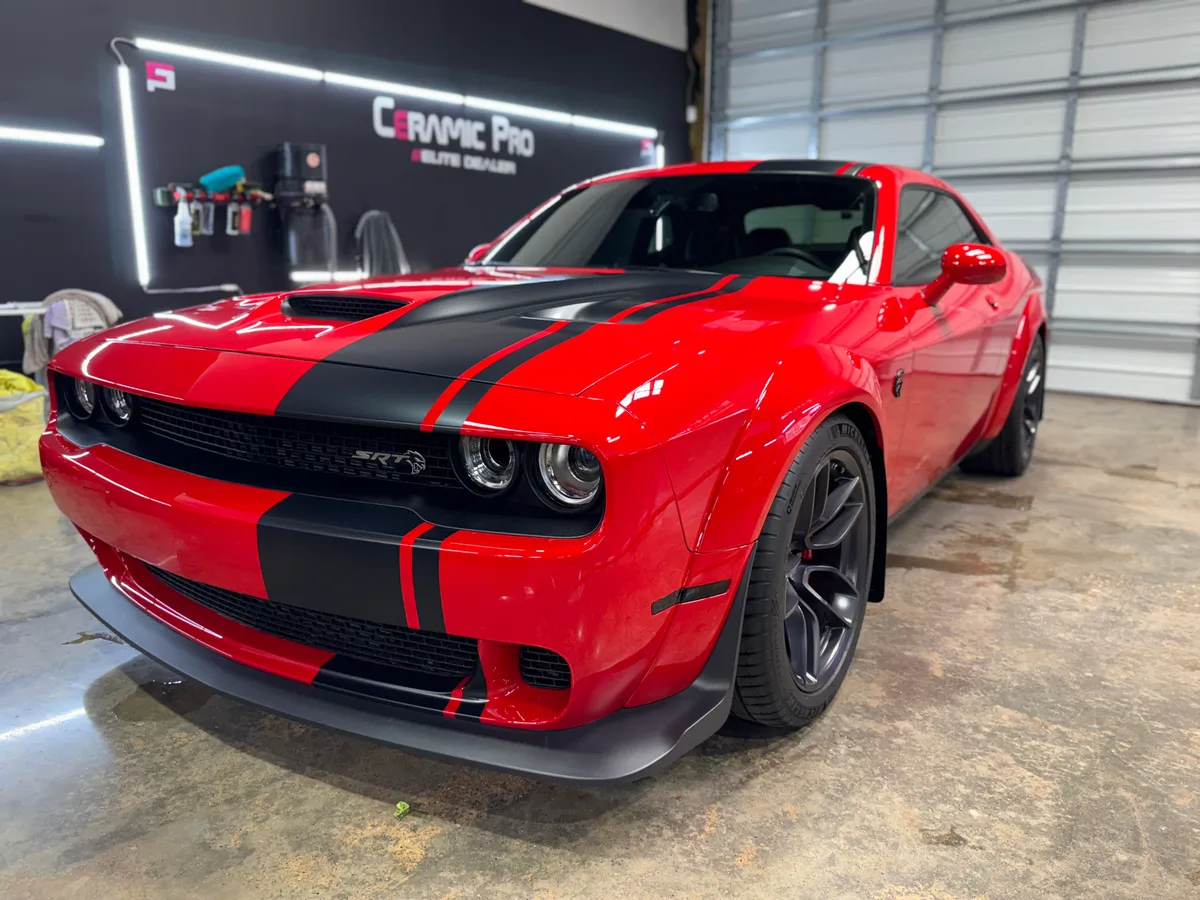
A competent PPF installer controls their environment. Film application requires low dust, stable temperature, and adequate lighting. You cannot do a quality full-front installation in a garage with a residential door open to a Fort Worth afternoon. If you visit a shop and their install bay looks like a general-purpose auto shop, that is information.
Film selection is the second variable. Not all urethane films perform the same. There are real differences in clarity, self-healing speed, edge sealing, and yellowing resistance over time. A shop that only offers one film option regardless of your vehicle, use case, or budget is not really fitting the product to your situation. Ask them why they chose the film they carry. If they cannot give you a specific answer, that matters.
Pattern cutting matters more than most buyers realize. The best installers either use a plotted pattern library, which ensures consistent cuts for your exact vehicle, or have the skill to hand-cut with precision. Edges that terminate in door jams and under trim look cleaner and last longer than exposed edges. Ask where the film edges on your specific vehicle will terminate. The answer tells you a lot about the installer’s approach.
Experience with your type of vehicle is underrated. A crew that has wrapped dozens of pickup trucks and SUVs has developed specific techniques for the complex curves on a Tacoma’s front bumper or the flat expanse on a Suburban hood that a mostly-sedan shop has not. Ask them what vehicles they install most often.
Questions Worth Asking Before You Commit
Before booking a PPF installation in Fort Worth, these are the questions that separate shops that know their craft from ones that are learning it on your car.
- What film do you use, and why did you choose it over other options?
- Where will the film edges terminate on my specific vehicle?
- Is my car’s paint in condition to go under film, or do you recommend correction first?
- What does your warranty cover, and who backs it: the shop, the film manufacturer, or both?
- Can I see completed installations in person, not just photos?
The last one matters because photographs can hide edge lifting, bubbling, and haze. A reputable shop will show you finished work without hesitation.
A Note on Color PPF and What It Changes
Color PPF has added a layer of complexity to the installer selection process. These are pigmented films that change or enhance the vehicle’s appearance while protecting it, functioning somewhat like a wrap but with the self-healing and protection properties of a urethane film.
The installation standards for color PPF are higher, not lower. Because the film is now a visible design element, alignment errors, tension wrinkles, and edge inconsistencies are immediately obvious. Shops that do solid work on clear PPF do not automatically translate that skill to color film. Ask specifically about their color PPF experience and look at examples from their actual build history.
How the Texas Climate Should Shape Your Decision
Fort Worth does not get the salt exposure of a coastal city, and that changes which protection priorities matter most. Road debris and UV degradation are the primary enemies here. Film that yellows or becomes brittle under sustained UV load is a real failure mode in this climate, and it tends to show up around year three or four rather than immediately.
If a shop cannot speak specifically to how their film holds up to prolonged Texas sun exposure, that is a gap in their knowledge. The DFW market is large enough that any serious PPF installer here has seen long-term results from their own work. They should be able to show you vehicles they installed two or three years ago.
What to Take Away From This
Choosing a PPF installer is a mechanical and craft decision, not a marketing one. The installer’s environment, film knowledge, cutting approach, and experience with your specific vehicle matter more than how polished their website is or how many five-star reviews are on their profile.
Visit the shop. Ask the technical questions. Look at finished work in person. If you leave that conversation with clear answers and can see clean examples of their installations, you are in a defensible position. If the answers are vague or they redirect every question toward price and scheduling, that is your signal to keep looking.
Good protection work is not complicated to evaluate. You just have to know what to look for before you hand over the keys.