
Anyone who has gripped a steering wheel in a Dallas parking lot in late July knows the heat here isn’t a minor inconvenience. It’s a sustained, months-long assault, and your vehicle takes the brunt of it far longer than you do. You step inside and crank the AC. The car sits in it, all day, every day, from June through September.
That exposure does real, cumulative damage. The good news is that almost all of it is preventable. Understanding how the heat attacks a vehicle makes it obvious which protection actually matters, so you spend on the things that work instead of the things that sound good.
What the Texas Sun Actually Does to a Car
Heat and UV radiation damage a vehicle in three distinct ways, and they happen in different places at different speeds.
Paint oxidation and fading
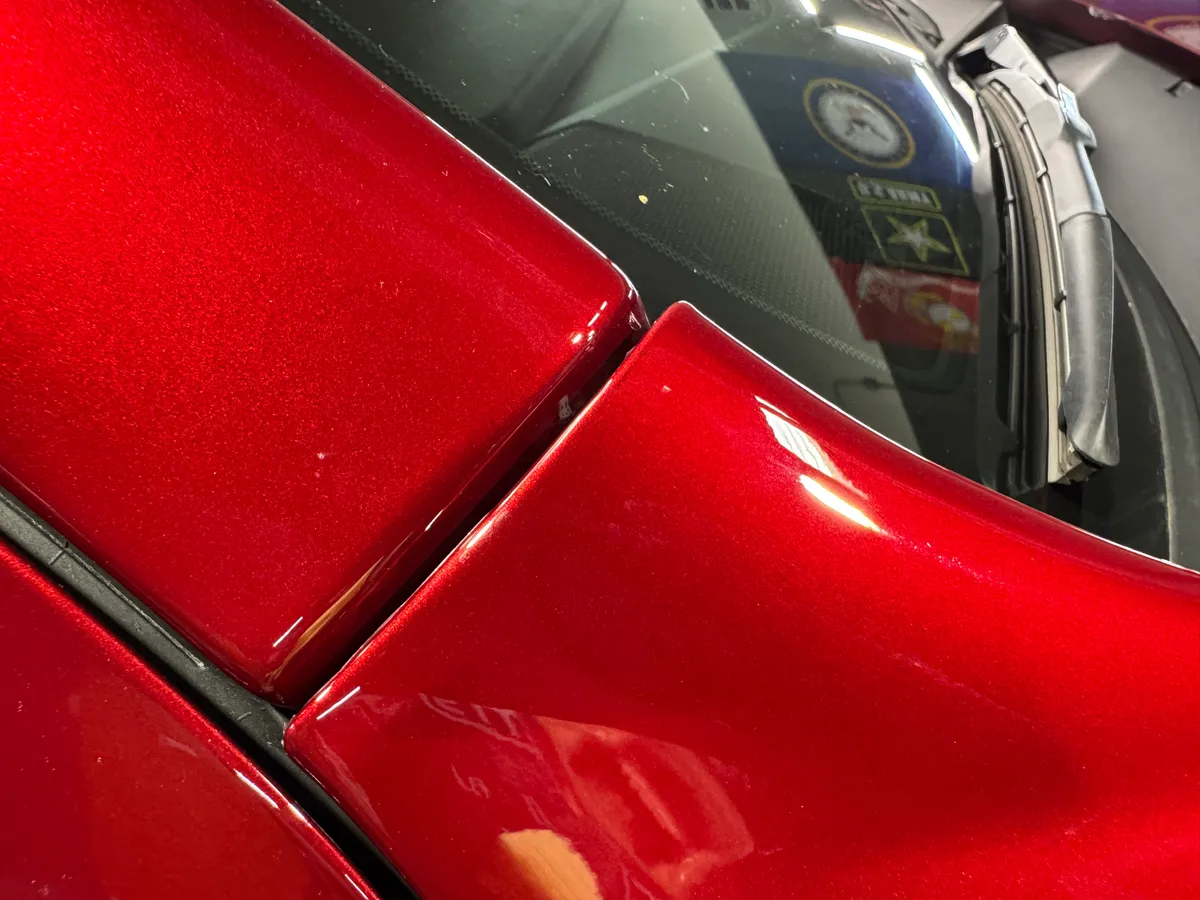
Automotive paint is protected by a clear coat, a transparent top layer that takes the UV hit so the colored layer beneath it stays vivid. Under the relentless DFW sun, that clear coat slowly degrades. As it does, it loses its ability to shield the pigment, and the color underneath begins to oxidize and fade.
You see it first on horizontal surfaces, the hood, the roof, the trunk lid, because they catch the most direct overhead sun. Reds and dark blues show it earliest. Left unaddressed, a once-glossy panel turns chalky and dull. Oxidation isn’t dirt; it’s the paint itself breaking down, and once it’s advanced, it takes paint correction to bring back, if it can be brought back at all.
Interior cracking and discoloration
The cabin of a car parked in Texas summer sun becomes an oven. Dashboards, door panels, and seats absorb that heat and the UV pouring through the glass. Over time, dashboards crack and warp. Leather dries out, stiffens, and splits. Plastics fade and develop a chalky surface. Carbon and fabric trim discolors.
This damage is particularly frustrating because it’s slow and invisible until it isn’t, then one summer the dash has a crack in it and there’s no polishing that out.
Clear-coat stress and contamination bake-on
Heat doesn’t only fade paint, it also makes everything that lands on the paint worse. Bird droppings, tree sap, and bug residue are mildly corrosive on their own. Bake them onto a 140-degree panel for an afternoon and they etch into the clear coat. Hard-water spots from sprinklers do the same. A car in Dallas summer is constantly being given things to etch, and the heat is the accelerant.
The Protection Stack That Counters Texas Heat
There is no single product that solves all of this, because the damage happens in different places. What works is a layered approach: protect the cabin, protect the paint, and back it up with sensible habits. Here’s how each layer earns its place.
Ceramic window tint for the cabin
If you do one thing for the interior, make it quality ceramic window tint. This is the layer that directly addresses interior cracking, fading, and the genuinely uncomfortable cabin temperatures.
The distinction that matters is ceramic. A cheap dyed film darkens the glass and not much else. A ceramic infrared-rejecting film, like the professional-grade ceramic film we install, blocks the overwhelming majority of UV radiation and a substantial amount of the infrared heat that makes a parked car unbearable. The result is a cooler cabin, less strain on your AC, and an interior that ages dramatically slower because the UV driving that aging is being stopped at the glass.
Texas law sets the rules here, front side windows must allow more than 25% light transmission, and a proper installer will recommend a film that performs well while staying legal. Heat rejection and darkness are not the same thing; you can get serious heat protection without an aggressively dark look.
Ceramic coating or PPF for the paint
For the paint itself, protection means putting a sacrificial, UV-resistant layer between your clear coat and the sky.
A ceramic coating chemically bonds to the clear coat and becomes the surface the sun and contaminants attack first. UV resistance is one of a coating’s core functions, it slows the oxidation process significantly, and its slick, hydrophobic surface means bird droppings and sap are far less likely to bond and etch before you can rinse them off. A coating is long-lasting, multiple years with proper maintenance, though it is not permanent and does not self-heal. It’s the most cost-effective UV defense for most daily drivers in DFW.
Paint protection film adds the layer of defense a coating can’t, physical impact protection against rock chips and road debris, and quality PPF also carries strong UV stability. Many owners of newer or higher-value vehicles combine the two: film on the high-impact front-end panels, coating over the rest. For the heat question specifically, either one meaningfully slows oxidation; the choice between them is mostly about whether you also want chip protection.
Texas summer is the worst time to leave paint and interior unprotected, and the best time to fix it. Tell us your vehicle and how it’s stored, and we’ll recommend the protection layers that actually matter for your situation. Request a quote for an honest assessment.
Habits that cost nothing and matter anyway
Products do the heavy lifting, but a few free habits compound their benefit:
Park in shade whenever you can. A garage, a covered structure, even the shaded side of a lot. Every hour out of direct sun is an hour of UV your vehicle doesn’t absorb. This is the single most underrated protection there is, and it’s free.
Use a windshield sun shade. The windshield is a huge, unfilmed pane of glass aimed straight at the sky. A reflective shade behind it keeps the dashboard, the most crack-prone surface in the car, significantly cooler.
Wash on a sensible cadence. Contamination that sits on hot paint is contamination that etches. Regular washing removes bird droppings, sap, and dust before the Texas heat can bake them in. If your vehicle is coated, the hydrophobic surface makes this faster, but it doesn’t make it optional.
Rinse off sprinkler spots quickly. DFW lawn sprinklers are everywhere, and the mineral-heavy water leaves spots that bake into hard-water etching fast. A quick rinse before they dry in the sun saves you a correction later.
Don’t rely on an automatic car wash. The abrasive brushes at many tunnel washes inflict the exact swirl marks that the Texas sun then makes more visible. Hand washing, or a touchless option, is gentler on whatever protection you’ve invested in.
Crack the windows when it’s safe to. A car sealed shut in a Dallas lot builds cabin temperatures that accelerate dashboard and leather aging. Where it’s safe to do so, leaving the windows open a small amount lets some of that trapped heat escape and takes a little of the daily load off the interior.
A Sensible Order of Operations
If you’re starting from an unprotected vehicle and a Dallas summer is bearing down, here’s a reasonable sequence.
Start with the windshield-to-cabin problem. Ceramic window tint delivers immediate, daily comfort and stops interior UV damage from day one. It’s the layer you feel the most, fastest.
Then address the paint. If the paint already shows oxidation or swirl marks, it likely needs correction before any coating, because a coating locks in whatever is underneath it. A proper installer inspects the paint in person and tells you honestly whether correction is needed first.
Add film where impact matters. If you want the front end protected from the rock chips that DFW highways hand out generously, PPF is the layer for that, and it can be combined with coating.
You don’t have to do everything at once. But doing it in a sensible order, and doing it before the worst of the summer rather than after, is the difference between protecting a vehicle and restoring one.
The Bottom Line
The Texas sun is patient and relentless. It fades paint from the top down, cracks interiors from the inside out, and turns ordinary contamination into permanent etching. None of that is dramatic on any single day, which is exactly why it gets ignored until the damage is done.
The defense isn’t complicated: ceramic tint to protect the cabin, a ceramic coating or PPF to protect the paint, and a handful of free habits to back them up. Done before summer hits, that stack keeps a DFW vehicle looking years younger than the calendar says it should. If you want a straight answer on which layers your specific vehicle needs, request a quote and we’ll walk you through it.