
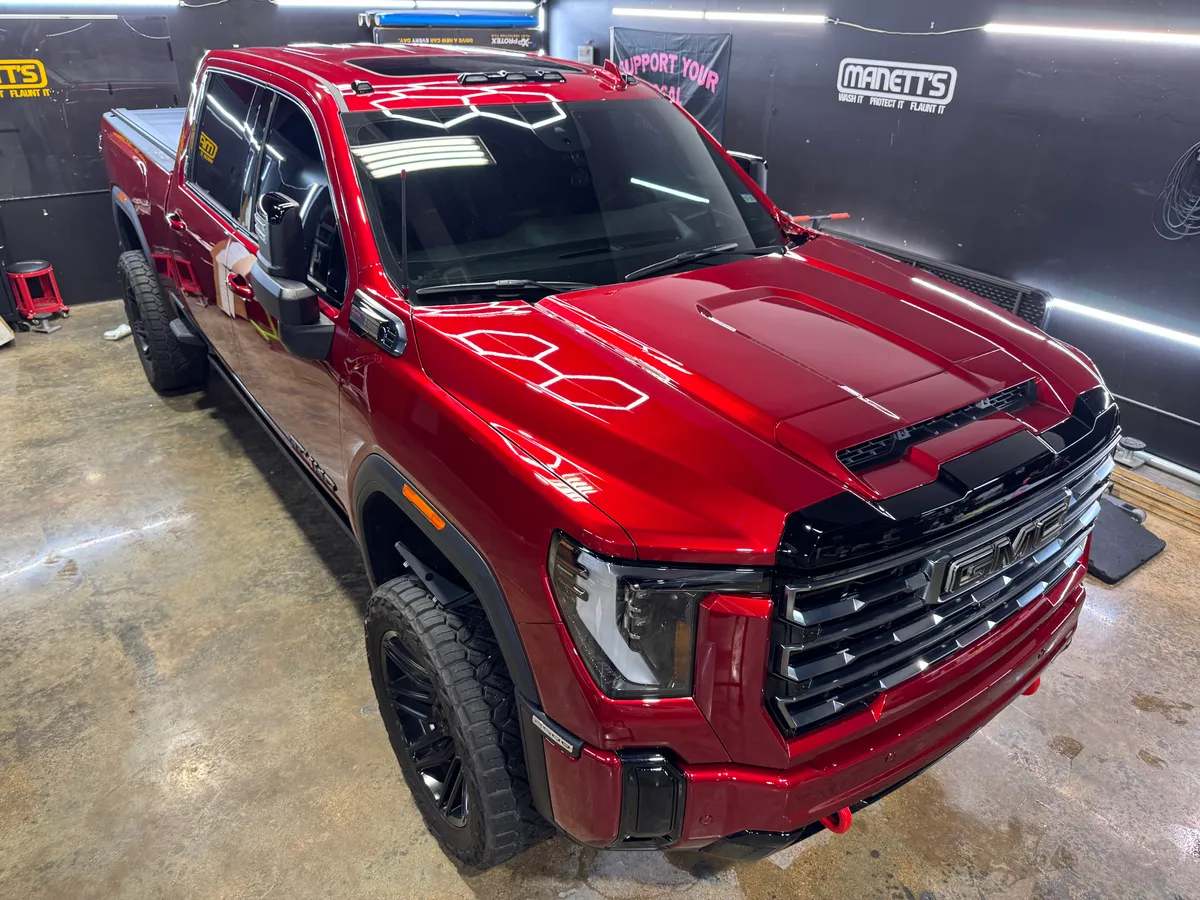
The Window Between Order and First Drive
Most people who care about their cars spend months researching a new purchase, then lose two or three weeks of protection simply because they did not know the window existed. There is a narrow stretch of time, starting the day you confirm delivery and ending the morning you pick up the vehicle, when every coating, film, or correction service you line up will have the cleanest, freshest surface it will ever have. That window closes fast. Dallas traffic, DFW construction dust, and a single hail cell moving through Tarrant County do not wait for your appointment.
This is not about spending more money on a new car. It is about understanding what a car actually faces here and deciding, before the odometer moves, which of those things you want to absorb and which you want to deflect.
What New Cars Actually Arrive With
Factory paint is not a finished product by the time the car reaches your driveway. It travels on a truck, sits in a staging lot, and gets buffed by someone at the dealership who may or may not know what they are doing. By the time the car lands in Texas, the clear coat often has swirl marks, rail dust contamination, or light wash scratches. These are not defects under any warranty. They are just what happens in transit.
Dealer prep compounds these issues. The person detailing vehicles in a service lane is working fast, not carefully. Rotary marks, swirl webs from circular buffer passes, and dried-on dressing overspray on rubber trim are all common findings when we put a new car under a polishing light at Protektd.
None of that is catastrophic. It is also not what you want underneath a ceramic coating or paint protection film. Which is why paint correction, even a single-stage polish on a nearly pristine car, is often the first line item on a new car’s protection plan, not an afterthought.
Paint Correction: Getting the Surface Right First
Paint correction on a new vehicle rarely means aggressive compounding. Usually it is a single-stage machine polish to remove the light contamination and swirl marks that arrived with the car. On a brand-new surface, that is generally a few hours of careful work, not a multi-day restoration job.
What it does: removes existing surface imperfections so that whatever you apply on top bonds to clean, flat, corrected paint rather than sealing defects in place.
What it does not do: permanently prevent future swirls. A corrected car still scratches if it is washed incorrectly. The correction step is about starting from the best possible foundation, nothing more.
For owners who plan to wrap the car in paint protection film, correction still matters. Film conforms to the paint surface. Any orange peel, contamination, or light marring underneath will be visible through the film, especially in direct sun. It is worth the step.
Ceramic Coating: Multi-Year Chemical Resistance
A ceramic coating applied to corrected, decontaminated paint creates a hard, chemically bonded layer over the clear coat. The practical effects that matter in DFW are real but specific.
Texas sun is aggressive. UV degradation that fades clear coat over years is meaningfully slowed by a quality ceramic layer. Bird droppings, tree sap from the pecan trees in older neighborhoods, bug splatter on the drive back from Waco, all of these are caustic to clear coat over time, and a coated surface gives you more window to wash them off before they etch. Dallas tap water is hard. Spot etching from water sitting on an unprotected surface in July heat is a legitimate problem here. Coated cars show that dramatically less.
What ceramic does not do, and this matters: it does not self-heal. A rock chip on a coated car is still a rock chip. A deep scratch still needs correction or touch-up. The coating does not make your paint invulnerable, and any formulator who tells you otherwise is selling you something. The hardness rating you see on professional coatings is measured on the pencil hardness scale, commonly noted as 9H, meaning it resists scratching from anything below that hardness. A rock off I-35 moving at highway speed does not care about that rating.
Coatings are also not permanent. Multi-year is accurate. How many years depends on maintenance habits, wash frequency, and exposure. That is the honest range.
Paint Protection Film: Physical Impact Defense
Where ceramic coating handles chemistry, paint protection film handles physics. PPF is a thick, urethane-based film that absorbs rock chips, road debris, and minor abrasions before they reach the paint. On Texas highways, where construction zones run for miles and chip-seal roads scatter gravel freely, this is not a theoretical concern. It is a Tuesday.
Full-front coverage, typically hood, fenders, front bumper, mirrors, and partial rocker panels, is where most owners start. Some go further with full-body film. The choice depends on how the car is used, how it is stored, and what the owner is comfortable maintaining.
One property PPF has that ceramic does not: self-healing. Light surface scratches in the film, from an errant car wash brush or a fingernail, relax and disappear with exposure to heat. Texas summers are useful for this. The film is doing its job and then quietly recovering. That is not marketing language, it is how the material behaves.
PPF and ceramic coating work well together. Film on the high-impact zones, coating over the film and across the rest of the car, gives layered protection that addresses both physical and chemical threats without redundancy.
Window Film: The One Everyone Puts Off
Texas heat inside a parked car is a legitimate safety and comfort issue, not an aesthetic preference. Interior temperatures in a black car parked in a Plano parking lot in August can exceed 150 degrees. That degrades leather, cracks dashboards, and fades interiors faster than almost any other factor.
Window tint applied before the car is in regular use means the interior starts protected, not playing catch-up. For owners considering KAVACA window film from Ceramic Pro, the options range from lighter visible light transmission for front windows to darker applications in the rear, with ceramic film technology that blocks significant infrared and UV regardless of the shade chosen.
Texas tint law sets specific limits on front side window darkness. A reputable shop installs within those limits and knows them without being asked. Any installer who does not bring this up before the job is a shop worth avoiding.
Thinking Through the Services Before You Need Them
The practical value of planning protection before delivery is sequencing. Each service has a logical order, and trying to book them reactively, after the car has been driven, washed twice, and parked under an oak tree in Addison, means working backward from a compromised starting point.
| Service | What It Addresses | Logical Order |
|---|---|---|
| Paint correction | Transit and dealer prep damage | First |
| Paint protection film | Rock chips, physical abrasion | Before coating |
| Ceramic coating | UV, chemical resistance, water behavior | After correction and film |
| Window film | Heat, UV, interior protection | Parallel or final |
None of these services require the car to be brand new. But the closer to delivery, the cleaner the starting canvas, the better the result. A car a few weeks into Dallas driving has already accumulated things that a paint correction step has to address first, adding time and cost to the overall process.
Line up the consultation before the car arrives. Know which services you want and in what order. The goal is to be ready when the car is, not to be scheduling appointments while the sun is already working on an unprotected hood.