
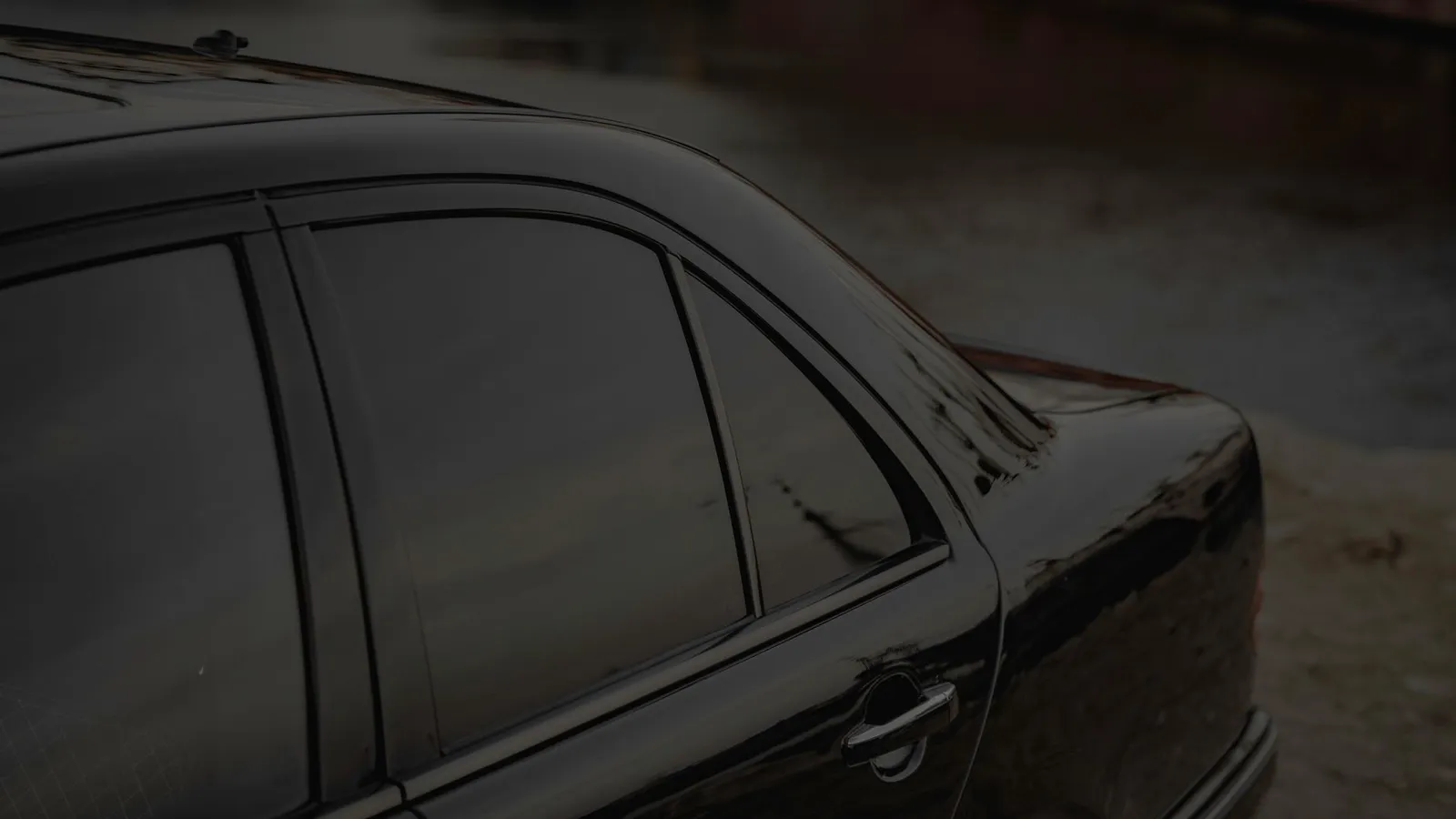
Most of the tint we remove in Dallas did not fail on day one. It faded, bubbled, or peeled after summers in a closed car. The owner usually notices it as a purple cast or a cluster of bubbles low on the glass and hopes a cleaner will fix it. Cleaner will not dye the film back, and it will not reattach adhesive that has already let go.
Replacement starts with taking the old film off. That is slower than it looks, especially on a rear window with defroster lines. Knowing the signs saves you a season of squinting through a job that is already done.
Purple is the dye, not the glass
Older dyed film carries its color in a dye layer. Heat cooks that dye. The shift is often toward purple, and it shows first on the rear glass and the back doors, where the film is darker and the cabin heat has nowhere to go. If the outside of the car looks plum in the afternoon and it did not look that way when it was installed, the film is fading. The glass underneath is almost always clear.
Ceramic film does not rely on that dye for its color in the same way. That is why we install ceramic tiers, not a dyed film we expect to turn. The comparison, if you want it before you spend, is in ceramic tint versus dyed tint.
A purple cast is not a warranty mood. It is the film telling you the color is gone. Polishing the glass from the outside does nothing, because the color is between the film and the inside of the glass.
Bubbles that were not there at delivery
A few tiny specs in the first day or two can be moisture that is still leaving the adhesive. A field of bubbles months or years later is separation. The adhesive has let go, and air or moisture is sitting in the gap. Those bubbles do not “settle” if you park in the sun. Heat is often what opened them.
Bubbles along the bottom edge, or in a band where a hand grips the glass, are common on film that was never meant for a Texas cabin. Peeling at a corner is the same failure, further along. Once an edge is loose, dust gets under it. At that point the film is finished.
Do not pick at a loose corner to see how far it will tear. You will leave adhesive on the glass and you may catch a defroster line on the rear window. Removal is a full-panel job. We do it wet, with the right pace, so the lines stay on the glass.
Haze, low spots, and the view at night
Some film does not turn purple. It goes milky, or it throws a fuzzy halo around headlights at night. That can be failing adhesive, a film that was never optically clear, or dye that has broken down without a strong color shift. If you are cleaning the inside of the glass and the haze does not move, it is in the film.
Night glare is also a darkness problem, separate from failure. Texas requires front side windows to measure 25% VLT or more, film and glass together. A front window that was installed too dark is not “failing.” It was non-compliant from the start. We will not match an illegal shade on the front doors to make a new rear film look consistent. The statute-level version of that limit is in Texas window tint laws.
What replacement actually involves
We remove the old film, clear the adhesive, and install new film on clean glass. Defroster lines make the rear window the slow part. If a line lifts, we stop and tell you. A replacement is not a layer on top of the old film. Stacking film makes the glass darker, traps the failure, and usually looks worse within a month.
Our two tiers are on the window tint page. Ceramic is 84% infrared rejection, two front windows from $200. Ceramic IR Elite is 94% infrared rejection, two front windows from $285. A full vehicle, a windshield, and a sunroof are quoted by the glass. The infrared number is heat rejection, not a darkness number. You can have strong heat rejection and still stay at a legal shade on the front doors.
If the old film is only ugly on the rear and the front is a recent ceramic job, we can replace the failed glass without redoing film that is still sound. Tell us which windows look wrong when you request a quote. A photo in daylight, from outside the car, is enough for us to see purple and peel. Bubbles show better from the inside.
What is not a failed tint
Pollen stuck to the inside of the glass, a nicotine film, and a cheap interior cleaner smeared in circles are all removable. If a damp towel changes what you see, clean the glass before you condemn the film. If the towel changes nothing and the color or the bubbles stay put, the film is the layer that has to come off.
We would rather remove it once, cleanly, than sell you a new front pair while the rear glass keeps cooking. Bring the whole car into the conversation, not only the window you notice first.