
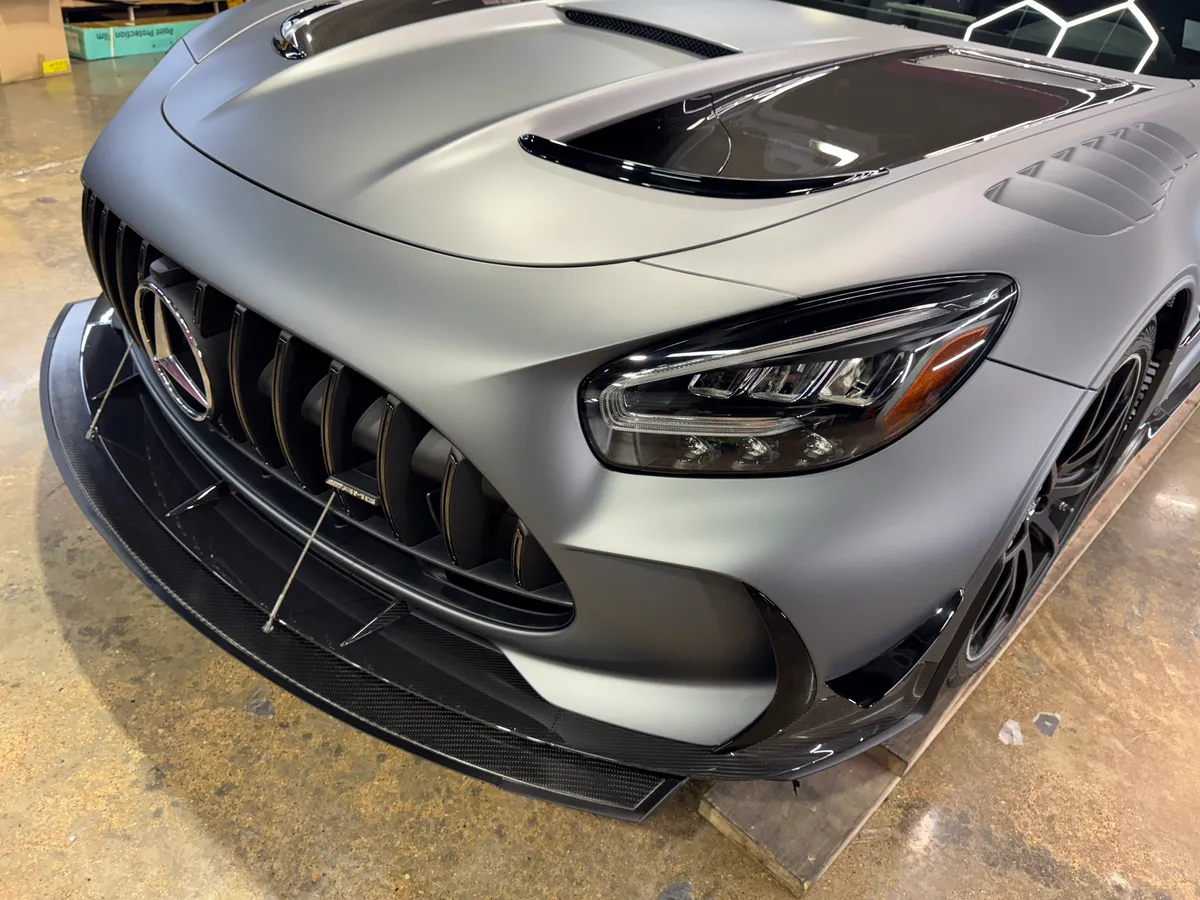
What March Actually Does to a Dallas Car
Drive through Frisco or Southlake in mid-March and you will see it on every horizontal surface. A yellow-green film on hoods, rooftops, windshields, porch furniture. Mountain cedar is winding down by then, but oak, ash, and pecan are just getting started. For people with allergies, it is miserable. For paint, it is a slow, low-grade acid problem that most owners do not take seriously until they see the damage.
Pollen is not just dirt. Individual grains carry organic acids. When they land on a warm hood, absorb morning dew, and then bake under a Texas afternoon sun, they begin to etch. The process is not instant. One heavy pollen day does not ruin clear coat. But a week of neglect, a weekend road trip to the lake, a few hard rain events that smear pollen instead of rinsing it, and the etching compounds. Dallas also sits at an altitude and latitude that concentrates UV exposure. That combination, acid plus UV plus heat cycling, degrades unprotected clear coat faster than most people expect.
The goal of this piece is not to alarm you. It is to give you a clear picture of what is actually happening to your paint in March and what your realistic options are.
Why Rain Does Not Save You
A common assumption: the rain will wash it off. This is worth addressing directly because DFW spring rain does not behave the way people imagine.
Most March rain events here are either brief and hard or inconsistent. A short storm generates enough force to move pollen across a panel, but not enough to flush it cleanly off the surface. What you end up with is a smeared, water-spotted residue. The pollen has been redistributed. Some of it has been pressed deeper into any micro-scratches in the clear coat. The water evaporates, and the pollen dries in place, now with a layer of mineral deposits from the water on top of it.
Automated car washes are a secondary issue. Tunnel washes, which most of Dallas relies on, use recycled water, coarse brushes, and blower systems that leave standing water in panel seams. They move contamination around. They do not decontaminate paint. There is a meaningful difference between a car that looks clean and paint that is actually clean at the surface level.
This is why the timing of spring detailing matters. Catching pollen before it has had three or four weeks to sit and bake is a different job than trying to correct paint that has already sustained surface etching.
The Honest Case for a Protective Layer
If your car has no protection on the paint right now, pollen, UV, and road debris are interacting directly with clear coat. That is the baseline. A protective layer changes what pollen contacts first.
Ceramic coatings create a hard, semi-permanent layer above the clear coat. When properly applied and cured, they reach a 9H hardness rating on the pencil hardness scale. Pollen still lands on a coated car. The difference is that a hydrophobic coating sheds water and contaminants more readily, which reduces dwell time. Pollen does not bond to the surface the way it does to bare or wax-only paint. Removal is easier and safer, which reduces the abrasion risk of wiping a dusty hood.
One thing a ceramic coating does not do: self-heal. If the coating sustains a scratch, it stays scratched. Coatings are durable and multi-year, but not permanent, and they need maintenance to perform as intended. That is just an honest accounting of what the product does.
Paint protection film adds physical impact resistance that a coating alone cannot provide. Quality PPF has a self-healing topcoat, meaning light surface scratches close with heat exposure, which Dallas summers provide in abundance. For the hood, which takes the most pollen, UV, and highway debris, PPF plus a ceramic coating over the top is the most complete combination available.
Neither of these options is a substitute for washing. They make washing safer and more effective. That is the realistic value proposition.
What to Do Right Now, in Order
This is where most articles go vague. Here is a specific sequence that actually makes sense for a DFW car owner in March.
First: assess the paint. Run your hand across the hood and roof under indirect light. Rough texture that does not go away after washing is contamination embedded in the clear coat, often iron particles and pollen debris. That needs decontamination, sometimes chemical, sometimes mechanical clay, before any protective product goes down.
Second: address any existing damage. If there is light etching or swirl marks already present, a paint correction step needs to happen before coating or film. Sealing in existing damage is a waste of money. This is one of the most common mistakes in this industry, skipping correction to save cost and then covering flawed paint with a coating that makes the flaws permanent.
Third: apply the protection appropriate to your situation. Not every car needs full PPF. Not every budget supports a multi-year ceramic package. What matters is honest matching: the right product for the car’s condition, how the owner drives it, and how much maintenance they will realistically do. A well-maintained single-stage coating on a daily driver beats a poorly maintained multi-layer job on the same car.
Fourth: maintain it correctly. A maintenance detail once or twice during peak pollen season is a practical habit, not a luxury. Safe wash technique, appropriate pH-neutral products, and periodic inspection for coating failure or contamination catch problems before they compound.
A Quick Look at the Protection Options
| Protection Type | What It Does Well | What It Does Not Do |
|---|---|---|
| Ceramic Coating | Hard surface layer, hydrophobic, multi-year durability | Does not self-heal, not impact-resistant |
| Paint Protection Film | Impact resistance, self-healing topcoat | Does not add the same hardness as a standalone coating |
| PPF + Coating | Most complete protection available | Higher investment, still requires maintenance |
| Quality Wax / Sealant | Low cost, easy to apply | Short lifespan, requires frequent reapplication |
The Practical Takeaway
March is not the worst month to have your car outside. But it is the month when doing nothing costs the most over time. Pollen sits, dew activates it, sun bakes it, and unprotected clear coat absorbs the result. That cycle runs every week for six to eight weeks across the DFW spring season.
If your car already has a coating or film, this is a good time to inspect it and schedule a proper wash and maintenance check. If it does not have protection, getting a paint assessment done before summer is a better move than waiting until August when correction costs more and heat makes application windows shorter.
The decisions that protect paint well are usually quiet, unsexy ones. Wash timing. Product choice. Not using a dirty towel on a dry panel. A layer of protection applied over clean, corrected paint. None of it is complicated. It just has to actually happen.