
The Question Comes Up More Than You’d Think
A customer drove a black 2019 Audi A5 into the studio last spring. Clean car, low miles for its age, clearly loved. He’d just bought it certified pre-owned and wanted to know if protecting it made any sense at this point. “It’s already two years old,” he said. “Didn’t I miss my window?”
He hadn’t. But the question was worth taking seriously, so we did.
That conversation happens here in Dallas more than anywhere I’d expect. DFW buyers are practical. A lot of them are picking up a three- or four-year-old vehicle with 30,000 miles on it, not a fresh delivery from a dealer showroom. They wonder whether protection is something you do at the beginning or not at all. The honest answer is that the condition of the paint matters far more than the age of the car.
What “Used” Actually Means for the Paint
A car that is two or three years old in North Texas has already been through something. The UV index here is not friendly. Summers run long and sit heavy. A car parked outside in Frisco or Plano through July and August takes more solar punishment than the same car would in Portland over a full year. That oxidation, that slow chalking of clear coat, starts earlier than most owners realize.
Then there are the roads. The stretch of 635 where construction has been running for years, the chip-seal surfaces on a lot of secondary roads out in Rockwall or Mansfield, gravel lots at half the restaurants in Allen. Used cars in DFW carry the evidence of all of that. Fine scratches in the clear coat, small chips along the front bumper and hood lip, maybe some light swirl marks from a drive-through wash somewhere along the way.
None of that disqualifies a car from protection. But it does change the order of operations.
Paint Correction Comes First, or It Doesn’t Work
This is the part people skip over, and it matters. Applying a ceramic coating or paint protection film over compromised paint locks that damage in. The coating will not fill scratches. The film will not hide swirl marks. What it will do is preserve whatever is underneath it for the life of the product.
So if the paint has light to moderate swirling, you correct it first. Paint correction at Protektd means machine polishing the clear coat to remove or reduce those defects before anything protective goes on. It takes time. It adds cost. It is also the thing that determines whether the car looks right after everything is done.
For a three-year-old car that has only been hand-washed, correction might be minimal. For a five-year-old car that ran through automated washes weekly, you may be looking at a multi-stage process. An honest inspection up front tells you where you stand.
What Protection Actually Does on a Used Car
Once the paint is in good shape, your options are the same as they are for a new car. They just need to be chosen with some realism about what each one covers.
Ceramic coatings bond to the clear coat and create a durable, hydrophobic surface that resists UV, light contamination, and environmental fallout. A quality coating in this category lasts multiple years with proper maintenance. It will not self-heal, and it is not a force field. A rock hit will still chip it. What it does is make the surface easier to clean, slow oxidation, and keep the paint looking like you care about it. Which, if you’re reading this, you do.
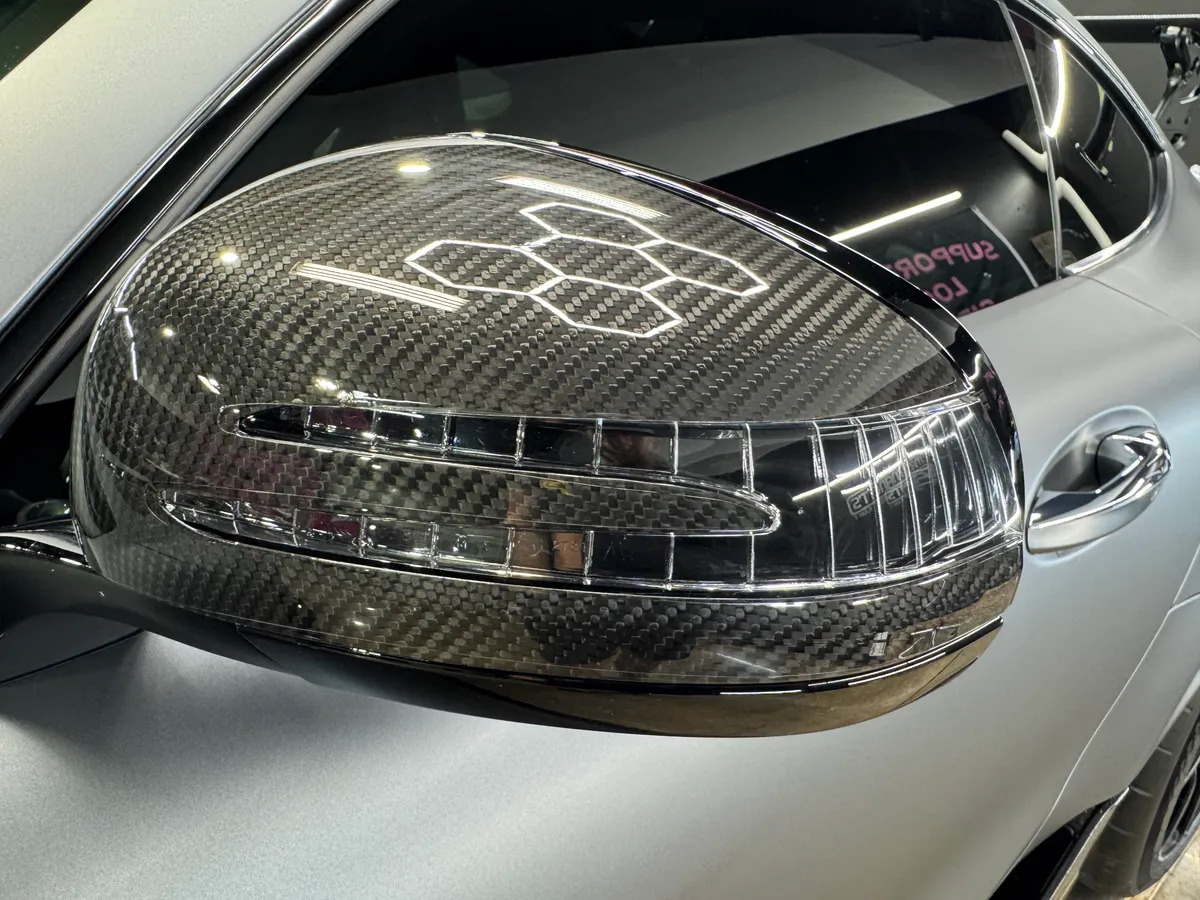
Paint protection film is a different material entirely. It is a physical barrier, thick enough to absorb impacts that a coating cannot. PPF self-heals from light surface scratches with heat exposure, which in a Dallas summer means it largely takes care of itself. It is most valuable on high-impact areas: the hood, front bumper, mirrors, and the leading edge of the roof. For a used car that already shows a few chips on the nose, full-front PPF stops the accumulation from continuing. It does not erase what is already there, but it stops the pattern from growing.
You can also find color PPF options that change the appearance of the vehicle at the same time they protect it. That is worth knowing if you picked up a car in a color you like but not love.
Window film is a separate consideration. Ceramic Pro KAVACA window tint reduces heat load inside the cabin, blocks UV, and cuts glare. In a DFW summer that is not a luxury detail, it is a practical one. It also has no interaction with the age of the exterior paint, so it applies equally to a new car and a five-year-old car.
Here is a straightforward look at how these options compare for a used vehicle context:
| Service | What It Protects Against | Self-Healing | Corrects Existing Damage |
|---|---|---|---|
| Ceramic Coating | UV, oxidation, light contamination | No | No |
| Paint Protection Film | Impacts, chips, scratches, UV | Yes (heat) | No |
| Window Film | UV, heat, glare | No | Not applicable |
| Paint Correction | N/A, prep step | N/A | Yes |
Maintenance After the Fact
One thing that genuinely changes on a used car is how you approach ongoing care. If you are starting fresh with protection, you are also starting fresh with a maintenance routine. That is a good thing.
For ceramic-coated vehicles, regular maintenance details using products designed to work with the coating, like the Manett’s line Protektd uses, keep the surface performing the way it should. Washing with the wrong chemistry degrades the hydrophobic layer faster than normal wear would. It is not complicated to do right, but it does require some consistency.
If you are in a situation where getting the car to a studio every few months is difficult, mobile detailing is an option worth knowing about. The work happens at your home or office, on whatever schedule actually fits how you live.
The Practical Takeaway
A used car is worth protecting if you plan to keep it, if the paint is in reasonable shape or can be corrected, and if you are realistic about what protection does. It is not a reset button on the car’s history. It is a line in the road where you stop the deterioration and maintain what you have from that point forward.
For most DFW buyers picking up a car they intend to own for several years, that line is worth drawing. The Texas climate is hard on unprotected paint. The roads here are hard on unprotected paint. The math of protecting a car you paid for, and maintaining that investment, holds up even when the car is not new.
The age of the car is rarely the variable that matters. The condition of the paint and the honesty of the inspection are.