
The Season Most Dallas Drivers Ignore
Most paint damage in North Texas does not happen in summer. It happens in the slow drift from October through February, when temperatures bounce between 28°F and 72°F inside the same week and nobody is thinking about their car’s finish. You put the convertible away, you stop washing as often, and you assume winter is the easy season. It is not.
This is not Minnesota. We do not bury cars in road salt for four months. But that is part of why North Texas winters are quietly destructive. The threats are irregular and easy to dismiss until the damage is already set.
What Actually Happens to a Finish in a DFW Winter
The biggest misconception is that cold air is inert. It is not. Temperature cycling is its own form of mechanical stress. A car sitting outside in Frisco or Southlake goes from 30°F overnight to 60°F by noon. That expansion and contraction happens in the clear coat, in any sealant layer, and in the film layer if you have one. Over a season, repeated cycles widen micro-defects that were already there.
Then there is moisture. North Texas does not get heavy snow, but it gets ice events, freezing fog, and cold rain that sits on horizontal surfaces. Standing water on a hood or roof that never fully dries, combined with road contamination already bonded to the paint, creates a low-grade chemical environment your finish was not designed to sit in for days at a time.
Ice scrapers deserve their own sentence. One bad morning, a panicked driver with the wrong scraper or a credit card drags it across the glass and adjacent paint. Those fine scratches in the clear coat and the swirl patterns they leave behind are entirely preventable. We see them every spring when people finally bring the car in.
Road chemicals are the last piece. TxDOT and local municipalities use brine solutions and magnesium chloride on bridges and overpasses before ice events. It does not go everywhere, but if you drive I-635, 121, or the DNT regularly, you are picking it up. It washes off, but only if you actually wash the car.
The Myth of “I’ll Just Wait Until Spring”
Spring is when we do the most paint correction work at Protektd. That is not a coincidence. Winter compounds problems that were manageable in October into problems that require cutting in March. Every month a contaminated, unprotected surface sits, the bonded material works deeper. Waiting is a choice with a cost attached to it.
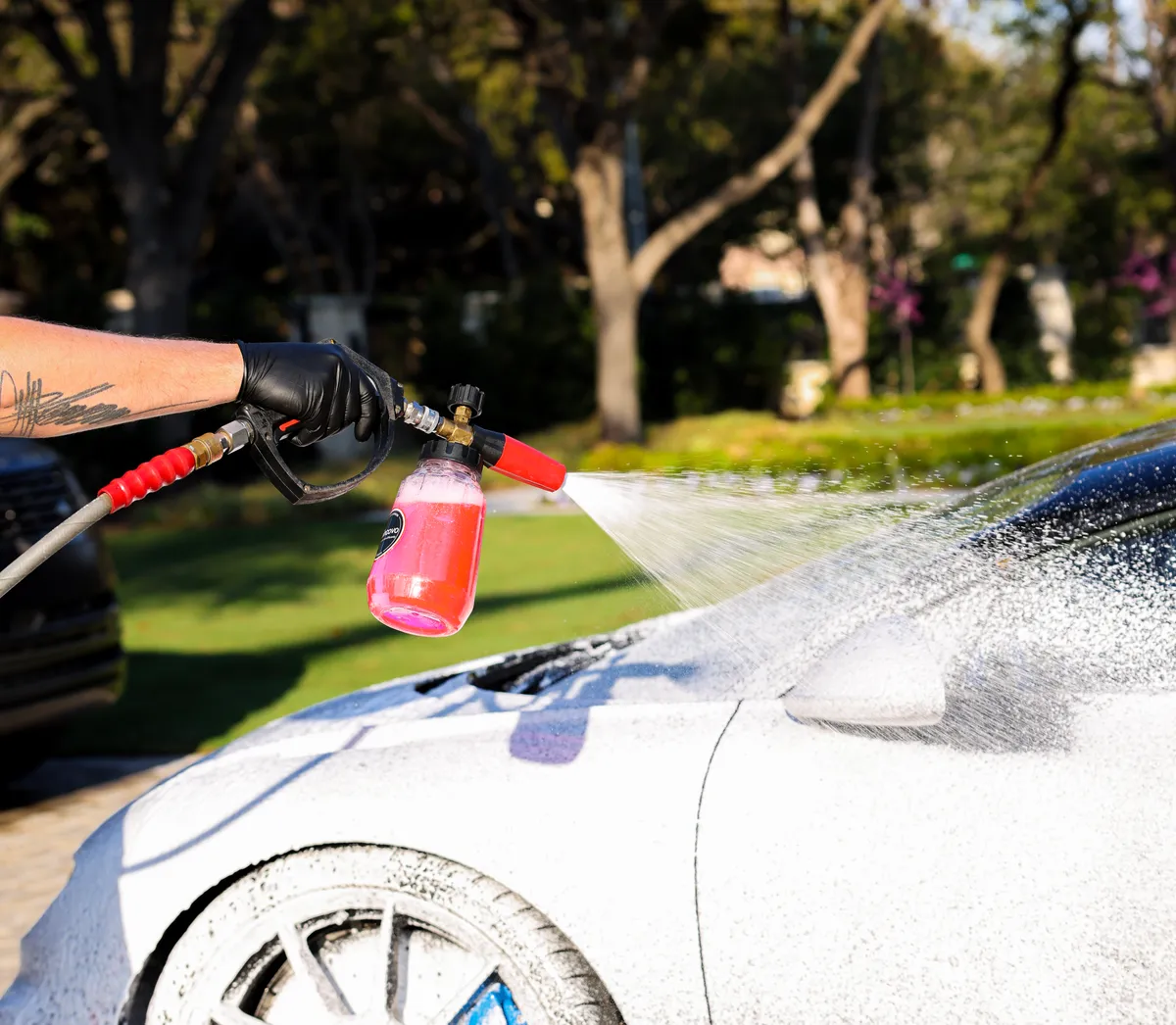
A simple maintenance wash every two to three weeks through winter removes the accumulating layer of fallout, road chemicals, and grime before it has time to etch or stain. This is not complicated detailing. It is basic prevention. If your schedule or driveway situation makes that difficult, mobile detailing at your home or office handles it without rearranging your day.
What Your Current Protection Is and Is Not Doing
This is where I want to be honest, because there is real confusion in how protection products get described.
Paint sealants and waxes provide a thin sacrificial barrier. They do a reasonable job repelling water and making wash days easier. They do not absorb impact, they do not resist sharp contamination, and they break down faster in temperature cycling. A good sealant applied in October may be largely depleted by February. They are better than nothing, and nothing is not the right answer.
Ceramic coatings are a different category entirely. A properly applied coating, such as those in the Ceramic Pro line we install here, chemically bonds to the clear coat and creates a surface that resists chemical etching, UV oxidation, and light contamination far more effectively than any wax or sealant. A 9H hardness rating means it sits at the hard end of pencil hardness, which gives it scratch resistance against light surface contact. It does not mean it is impervious to sharp impact or deep swirls. Coatings do not self-heal. They are also not permanent. Multi-year durability, yes. Permanent, no. Anyone telling you otherwise is not being straight with you.
Paint protection film is the only product category that absorbs physical impact and self-heals. The self-healing property is heat-activated, meaning a light surface scratch fills in with warmth, whether that is sunlight or warm water. For someone parking at DFW or Love Field regularly, or driving high-mileage on I-35, PPF on the front end makes a measurable difference over a winter season. The comparison below gives you a cleaner picture of how these stack up for the specific threats winter creates.
| Threat | Wax / Sealant | Ceramic Coating | Paint Protection Film |
|---|---|---|---|
| Chemical fallout / brine | Minimal protection | Good resistance | Good resistance |
| UV oxidation (even in winter sun) | Short-term only | Excellent | Good |
| Rock chips and road debris | None | None | Primary strength |
| Light scratch / swirl resistance | None | Moderate | Self-heals with heat |
| Ice scraper contact | None | Slight hardness benefit | Absorbs and heals minor contact |
| Ease of maintenance wash | Slightly easier | Significantly easier | Significantly easier |
Window Film Is Part of This Conversation Too
North Texas winter has some of the clearest, lowest-angle sun of the year. The sun sits lower in the sky, which means it comes directly through the front and rear glass into your eyes and dashboard at angles summer sun typically does not hit. UV transmission through unfilmed glass continues year-round, and that interior degradation, fading dash, cracking leather, dried-out trim, is cumulative.
Ceramic Pro KAVACA window film is what we install at Protektd. It is not a privacy tint. It is an optical-grade film that blocks UV and infrared heat while maintaining clarity. A properly filmed car in January is still a comfortable car on a 65°F sunny afternoon, and the interior protection continues regardless of season.
What to Actually Do This Winter
The practical answer is straightforward. Keep the car clean through the season. Do not let contamination sit. Know what protection you have in place and what it realistically covers. If you do not know what is on the paint, assume the answer is not much.
If the car has never had a coating or film, winter is not the worst time to address it, but go into it with clear expectations. A paint correction appointment first makes sense if the surface has visible swirls or etching, because applying a coating over compromised clear coat just locks the damage in. We will tell you that plainly before any job, even if it means the estimate goes up.
Winter in DFW is short. The window between good application conditions and the heat of late spring is narrow. What you do between now and March usually decides what the car looks like in July.