
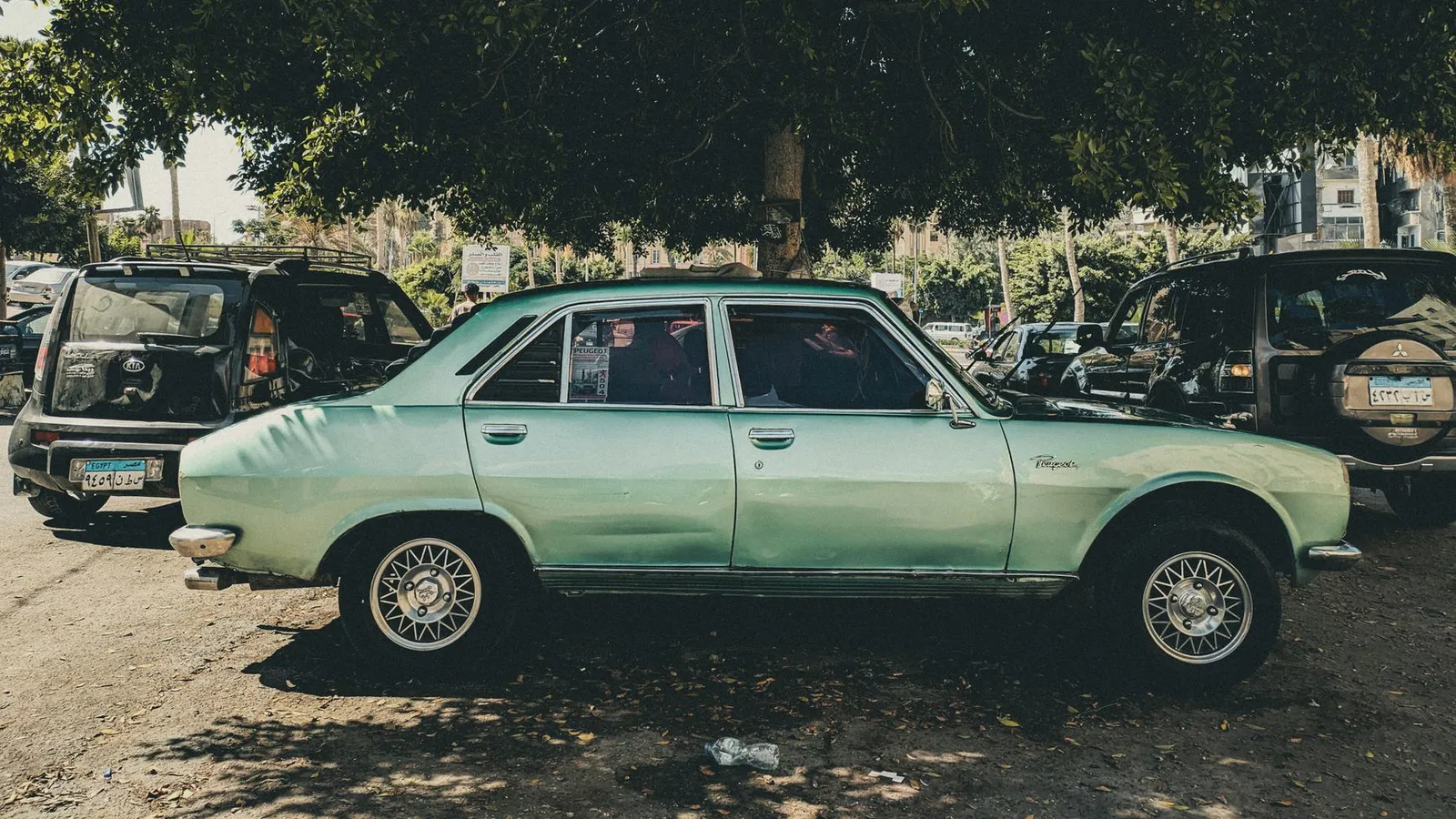
Shade in Dallas is valuable, and a lot of the shade is a tree. The car is cooler. The hood collects sap, pollen dust, and the occasional dropping, and the finish pays for the temperature drop. People treat sap like a dirty spot they can wipe. Fresh sap wipes. Baked sap smears, then scratches, then etches a dull circle you can still see after the stickiness is gone.
Pollen season is its own calendar, and we already covered it in spring pollen on Dallas cars. Sap is the sticky problem that shows up whenever the tree is active, including months that are not “pollen season” on a chart.
What sap does if it stays
Sap is a resin. On a cool morning it is a dot you can lift. On a hot hood it softens, spreads, and then hardens as it bakes. The hardened dot holds grit. Wipe it and you drag that grit in a circle. Leave it and the resin can mark the clear coat the way a bird dropping can, with a cloudy footprint after the residue is finally gone.
Film takes that resin on the film instead of on the paint. That is worth something if you park under trees on purpose. The film can still stain, and a hardened drop can still need a solvent to release. The paint is the layer you were protecting. Do not assume the dot “becomes part of the self-healing.” Self-healing is heat relaxing light scuffs in the top layer. It is not a solvent.
A ceramic coating makes a fresh drop easier to lift and does not make a baked drop irrelevant. Coatings do not self-heal and they are not permanent. If the cloudy ring is already in the clear coat, the coating is a later step, after correction.
How to get it off
Cool the panel. Do not attack a hot hood with a dry towel. Soften the drop with a product made to release tar and sap from automotive paint, used sparingly, or with a warm, wet microfiber and patience if the drop is still fresh. Work it up and off. Do not saw it sideways across the panel.
If you use a solvent, keep it off fresh film edges, off trim you are not sure about, and off any paint that was sprayed recently. A little on a towel is the method. Pouring it on the panel and letting it sit in the sun is how you trade sap for a stain.
Wash the area with car soap afterward so the solvent does not stay on the coating or the film. Then look at the spot in shade. If the color is even and the surface is smooth, you are done. If a dull ring remains, stop. That ring is a correction question, not a second round of solvent.
Paint correction starts at $450 when the clear coat can spare the cut. We will not chase a sap ring through the clear coat to make a photo look perfect.
Shade that does not drop resin
A carport, the north side of a building, and a garage are the shade that does not feed the hood. A tree is a compromise. If the tree is the only reason the cabin is survivable at 5 p.m., keep the tree and change the protection and the cleanup. A rinse on the days you see fresh dots is cheaper than a correction in September.
A cover can help and can also scratch if dust is under it and the wind moves it. Do not cover a sappy hood and then drag the cover off a week later. Lift the sap first.
If the parking spot is permanent, put the resin on a layer you can replace. That is paint protection film on the horizontal panels you actually park under the canopy, not only the bumper you worry about for highway chips. Coverage can be Custom. We name the panels. The services list starts at $850. There is no separate published price just for a roof and a hood. The quote follows the car.
Birds and trees travel together
Where there is a roost, there are droppings. Sap and droppings on the same hood are a common pair under live oaks in established Dallas neighborhoods. The dropping is the acidic one. The sap is the sticky one. The rinse-and-lift habit for droppings is in bird droppings and Dallas paint. Do the dropping first if both are on the panel, because the acid is the one that etches while you are still reading the bottle of sap remover.
Tell us about the parking spot
Protection quotes get better when we know the car sleeps under a tree. Request a quote and say so. We will not tell you to give up the shade. We will tell you which panels take the resin, what a wash has to include, and whether the dull spots we can already imagine are still in the clear coat or only in the stories about it.