
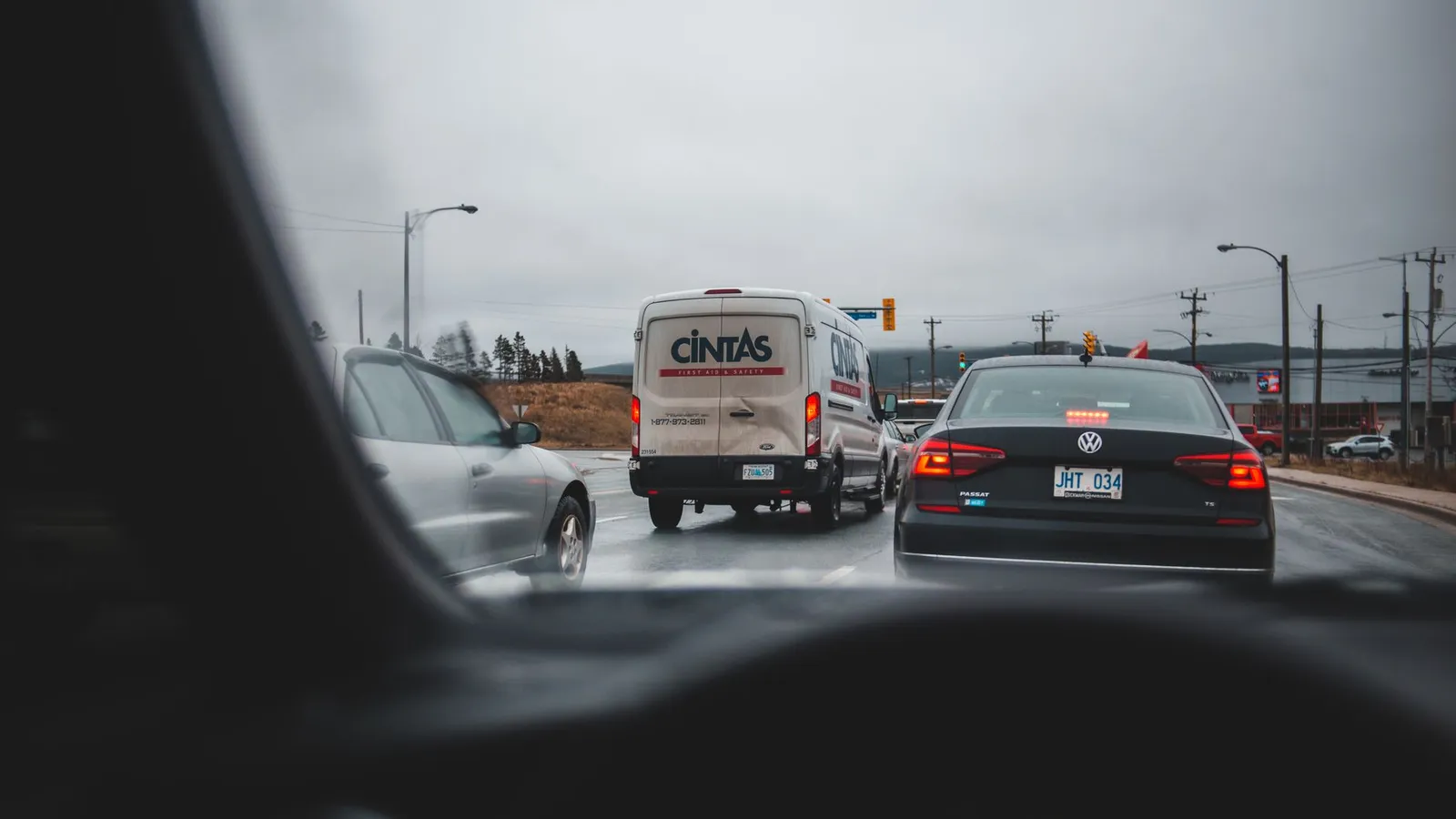
The windshield is the largest piece of glass on the car and the one Texas is strictest about. People ask us to tint “the whole windshield, but light” because the dash is cracking and the morning drive east on I-30 is miserable. The statute does not give us that job. It gives us a strip at the top, and it gives us a separate quote when the glass area is a windshield, a sunroof, or a panoramic roof.
This is the boundary. It is also why a windshield line on a quote does not match the price of two front doors.
What the statute actually allows
Texas Transportation Code 547.613 allows a sunscreening device on the windshield when, together with the glass, it has a light transmission of 25 percent or more, a luminous reflectance of 25 percent or less, and it is not red, blue, or amber. It also must not extend downward beyond the AS-1 line, or more than five inches from the top of the windshield, whichever is closer to the top.
The AS-1 line is the manufacturer’s mark, usually a faint band or a small label at the top of the glass. If you cannot find it, the five-inch measure is the stand-in, and the closer-to-the-top rule still wins when both exist. We do not estimate the line from the driver’s seat and hope. We look at the glass.
Front side windows are a different pane with the same transmission floor: 25% VLT or more, film and glass together. Rear side windows and the back window on a passenger vehicle can be darker. That freedom does not migrate up onto the windshield because the rear glass is dark.
A longer walk through the rest of the rules is in Texas window tint laws. If a detail here ever conflicts with the statute or with DPS guidance, the statute wins, and we install to that.
Why a windshield is quoted by the glass
Two front windows on our Ceramic tier start at $200, at 84% infrared rejection. Ceramic IR Elite starts at $285 for those two windows, at 94% infrared rejection. A windshield is not “two more windows.” The area is larger, the legal strip is a different pattern than a full door, and a sunroof or a panoramic roof is different again. Those are quoted by the glass. The figures live on the window tint page.
Infrared rejection is the heat number. It is not a permission slip to run the film below the AS-1 line. A legal strip can still reject a useful amount of heat at the top of the dash and the headliner. It will not turn the cabin into a shaded garage. Dashboard aging and what tint can honestly change is in why Dallas dashboards crack.
What we will not install
We will not run a darkening film down the driver’s view of the windshield. We will not match a too-dark front door to a windshield strip so the top of the glass “looks even” from the curb. Even is not the standard. Legal and optical clarity are.
We also will not stack a new strip over an old, bubbled brow. The old film comes off first. Adhesive left in that band shows up every time you drive into the sun. Removal on a windshield edge is careful work because the glass is the one you look through.
If a shop told you a medical note lets them tint the entire windshield darker without paperwork, do not take that from us secondhand. We do not invent an exemption process in a quote. Read the state rules, or read our law piece, before anyone films the glass you use to see traffic.
Brows, visors, and the cars that already have a strip
Some vehicles already have a factory shade band. Adding film on top of that band can push the transmission too low even when the film itself would have been legal on clear glass. We measure the combination, because the statute measures the combination. If the factory band plus film would fail, we say so and we leave it off.
A visor strip that someone cut freehand, below the line, with a dye film that has gone purple, is a removal. We replace it only inside the line. The new edge should be straight. A wavy brow is not a style we are interested in leaving on the car.
If the heat is the actual complaint
Tell us where you park and which direction you drive in the morning. A legal brow plus ceramic film on the front doors and the roof glass, quoted properly, is often the real answer. A full dark windshield is the answer we will not give.
Request a quote and say “windshield” specifically if that glass is what you care about. We will look for the AS-1 line, tell you what can go above it, and price the rest of the glass on its own. The dash will still appreciate a sunshade when the car sits all day. The film is the part that stays with the glass when you forget the shade.