
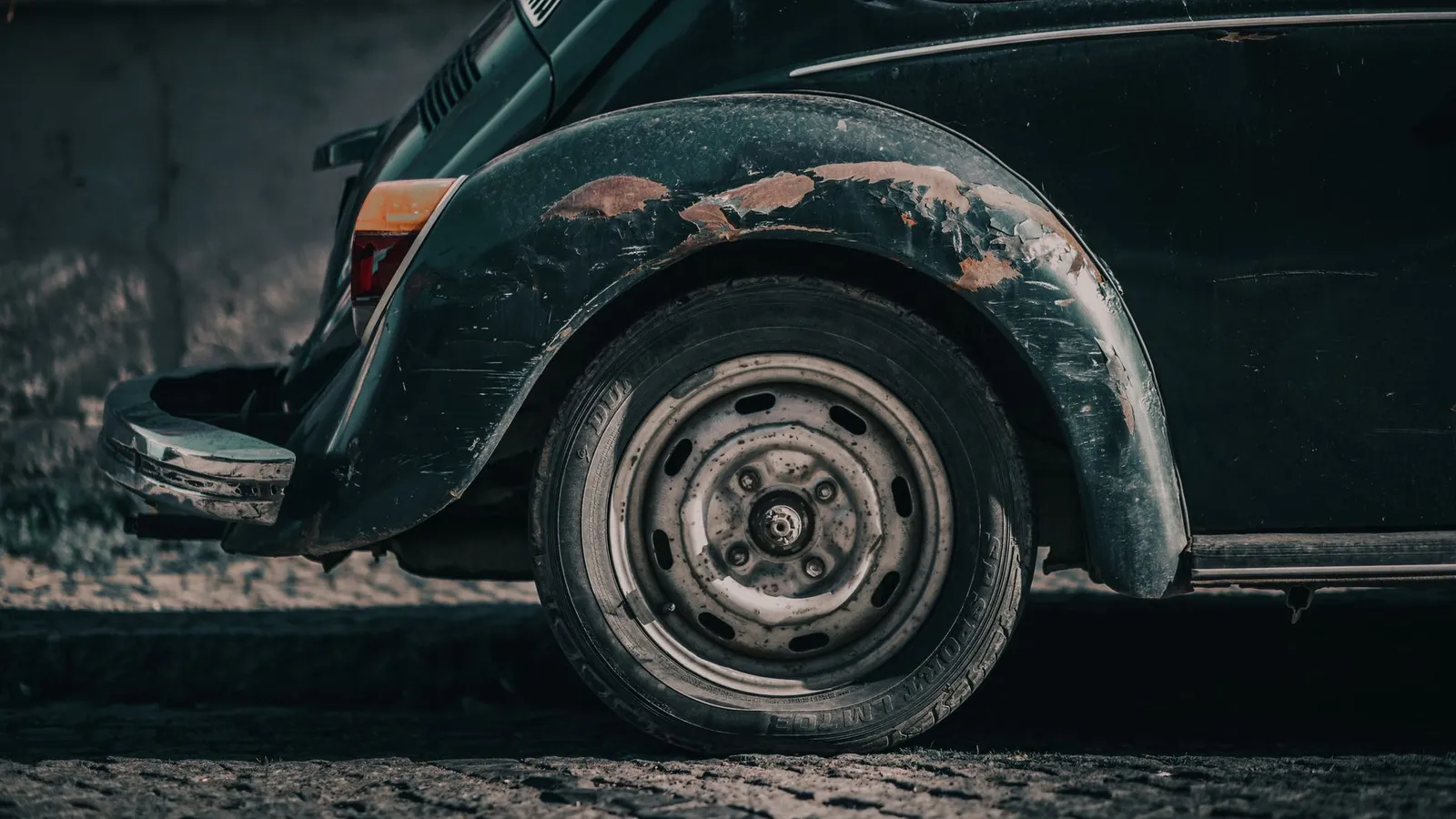
A high-mileage car in Dallas is not a lost cause, and it is not a new car with dirt on it. The clear coat has been washed, parked, chipped, and baked. Correction can make the remaining clear coat look honest again. It cannot put clear coat back, and it cannot turn a scratch that has already reached the color into a secret.
People hear “paint correction” and picture a reset. The work is a measured cut. On a car with 120,000 miles, the measurement is the whole job.
What correction is removing
Swirl marks, light scratches, oxidation, and water-spot etching all live in the clear coat. A machine polish levels the clear coat around them until the bottom of the defect is the new surface. That is why the panel looks deeper when it is done. You removed the rough layer that was scattering light.
Every pass spends clear coat. Factory clear is thin to begin with. A car that has already been polished twice, or buffed by a detailer with a heavy pad and no gauge, may not have a third correction left. We read the paint before we promise a result. If the meter and the eye say the clear coat is thin on the tops of the panels, we stop the ambition there. Flat panels and curves do not wear the same way. The hood can be tired while the doors still have something to give.
Paint correction starts at $450 because that read, and the work that follows it, is the product. A one-step improvement and a multi-stage correction are different amounts of clear coat and different amounts of time. The stage breakdown is in paint correction stages.
What we will not chase
A scratch you can catch with a fingernail has a chance of being through the clear coat. If the color is missing and you see primer or metal, polish will not dye it back. Touch-up can hide it from six feet. It will not match the corrected paint around it under a low light, and we will tell you that before you buy a correction you think includes bodywork.
Rock chips are the same category. We do not “correct” a chipped leading edge into factory paint. We can refine the clear coat between the chips so the panel looks cleaner, and we can talk about film so the next chips land on urethane. The chip that is already there stays, unless a body shop repaints the panel. Film over a rusty chip is a bad idea. We leave that chip out or we ask you to repair it first.
An old respray that is peeling, checking, or a different texture than the rest of the car is not a polish problem. Cutting it can make the failure show faster. We will point at it and leave it alone.
Oxidation versus dirt
Orange peel is the texture the factory sprayed. Correction does not sand a car to a show-glass flat unless that was a separate, explicit refinishing job, and that is not what our correction service is. We are not in the business of wet-sanding a daily driver so it photographs like a trailer queen and then fails in the sun a year later because the clear coat is gone.
Oxidation is the chalky, dull look on paint that has lost the easy gloss, common on horizontal panels that lived outside. Light oxidation can come back with a polish. Heavy oxidation on neglected single-stage paint, or on clear coat that has already failed, may only improve so far. Single-stage paint, where the color is the top layer, is a different cut than modern clear-coat paint. Tell us if you know the car was repainted, or if it is old enough that it might not have a clear coat at all.
Coating after, only if the paint earned it
A ceramic coating on a high-mileage car is reasonable when the paint you are locking in is the paint you want to look at. Coating over remaining swirls and chips makes them tidy and permanent-looking. The coating itself is not permanent and does not self-heal. It will not fill a chip.
If the correction got the paint to a place you like, a 1-Year coating from $500 is often the sensible package on a car you do not plan to keep for five years. A 5-Year package from $1,550 is a different commitment, and it expects maintenance. We will say which one fits the car and the ownership, not which one sounds longer. That sequence, correction then coating, is the point of why paint correction comes before a coating.
Bring the car, not the mileage story
Mileage is a hint. The panels are the evidence. A garage-kept car with 90,000 miles can have better clear coat than a three-year-old car that lived in a tunnel wash. Request a quote and tell us what you want to be true when you walk around the car afterward: fewer swirls in low sun, a nose that is easier to live with, or a full reset. We can do the first two when the clear coat allows them. The third one is how people get a thin panel and a disappointment.